eSefarad Noticias del Mundo Sefaradi

Ver todos los artículos de esta sección
Rabbi Yehuda Benattar and overspending in parties and celebrations
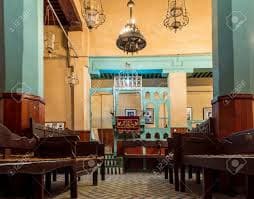
THE JEWISH COMMUNITY OF FEZ
There were no less than 15,000 jews living in the city of Fez (or Fes), Morocco, in the 8th century. Fez was also famous for being the city where one of the greatest rabbinic luminaries of all time, Rabbi Isaac Alfasi (1013-1103, the surname «Alfasi» means: native of Fez) founded and operated his famous Yeshiba, or academy of rabbinical studies.
Fez also happened to be the city where Maimonides lived for a few years, before settling in Egypt.
Fez was also the destination for many Jewish refugees who were expelled from Spain and Portugal in 1492 and 1497.
The Jewish community of Fez also suffered hunger, drought, fire, persecution and killing. The first massacre occurred in the year 1033 when a large group of Muslim extremists invaded the Jewish quarter and murdered the more than 6,000 Jews who were living at the time in Fez. Only 4 men and 5 women survived. Something similar happened in the mid-fifteenth century.
In 1947 more than 22,000 Jews lived in Fez, of a total of 250,000 Jews residing in Morocco. As of 1948 the majority of Moroccan Jews emigrated to Israel, France, Canada, Venezuela, etc. Today, about 100 Jews still live in Fez.
STUDY AND WORK
The rabbi I will write about today was is Rabbi Yehuda Benattar (or Ben Attar). He was born in Fez in the year 1655. His teachers, Rabbi Vidal Sarfatti and rabbi Menahem Seriro (or Serilio), belonged to the great rabbinical dynasties of this city. From an early age, Rabbi Benattar stood out as a great rabbinical luminary. At age 23, he lost his father, and from that moment he worked as a goldsmith. He had Jewish and Muslims clients and since he was a skillful and honest craftsman, he became very famous. It is said that to this day some Muslim residents of Fez claim to have rings made by Rabbi Benattar, and they consider it invaluable (and use it as a talisman!).
His work did not prevent him from studying the Tora. Every day, after the morning prayers (shaharit), rabbi Benattar went to work and once he had earned the necessary means for the day, he closed his business and went to his Yeshiba to study, teach and write.
The great knowledge of Rabbi Benattar was recognized by all the rabbinic personalities of Fez. In 1698 Rabbi Benattar was chosen by all local rabbis as the Ab Bet Din, Chief of the Rabbinical Court of the community, the highest office a rabbi could have there.
The famous Rabbi Hida tells that despite his complete dedication to the community, Rabbi Benattar continued during all his life to work as a goldsmith and decided not to receive a compensation for his community work
RABBI AND TEACHER
Rabbi Benattar had many students. Virtually all the rabbinical students of Fez considered themselves his disciples. He implemented a teaching system that was not very common at that time: training his students in oratory, and preparing them to deliver sermons in public. He made them speak in public every Shabbat at the time of Minha. The Rabbi supervised the preparation of the sermons and edited them. And then, he recorded many of these sermons along with his own speeches, in one of his famous books: Minhat Yehuda, a collection of sermons (derashot) on the Tora and the Perasha of the week . This book remained in manuscript for centuries. It was printed for the first time in the city of Maknez, in the year 1940, see here.
RABBI AND COMMUNITY LEADER
Rabbi Benattar was not only a Tora scholar, he was also a great community leader. Among other things he established certain taqanot, that is, decrees or regulations that the rabbis establish to correct some habits that are harmful to the community.One of these taqanot was implemented to limit the excess in the celebration of life cycle events . Some families in the community spent too much on the celebration of weddings. Others, did not want to be left behind. And this caused many community members to take loans and get into big debt to spend «like everyone else». Rabbi Benattar established limits for the number of celebrations to be performed, for the number of guests that will attend, and even for the menu and the quality of the food that was to be served. He taught that weddings, and other religious parties, should be celebrated in moderation, without showing off and in an a way that is accessible for most of the community.
To the surprise of many, this decree was well received and finally adopted by the community at large.
Why?
The secret of Rabbi Benattar’s success as a rabbinic leader is that he was not only «respected» by his community, Rabbi Benattar had won the affection of all, and was «loved» by his community. So when he issued a critical judgment towards the community, he did it from a positive, paternal place; to correct and not to criticize, and so were his words received by his community.
He was one of the most influential rabbis in the history of the Moroccan Jewish community. To such a point that his rabbinic verdicts, his taqanot and his halakhic opinions are to this day the basis of the practice of Moroccan Jews.
Rabbi Benattar died in 1733 at the age of 77 years.
Rabbi Yosef Bitton
Fuente: halaja.org