 eSefarad Noticias del Mundo Sefaradi

 A year or two ago I attended the funeral of a neighbor’s father. One of the eulogies described how the kindness, knowledge and experience of the deceased were a model that is gradually being lost as the generation raised in pre-World War II Europe dies out. At the time I thought of my father, now also gone, who fit this mold.
Having been raised by parents born and raised in Europe before World War II, my home contained a certain flavor, an unmistakable Jewish identity and outlook that was inhaled through their essence. I felt that this flavor, not related to level of religious observance, was absent from the homes of friends born to American parents.
It saddens me that I will be unable to transmit this flavor to my children.
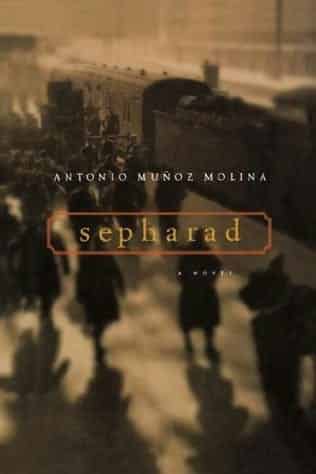
I thought of this when reading the heart-breaking book Sepharad, by Spanish writer Antonio Munoz Molina. Molina compiles and interweaves a series of moving stories that he heard over the years during his travels. Most stories take place in pre-World War II Europe, and have a Jewish connection.
Molina met Senor Salama after Salama invited him to a cultural event in Madrid. Salama and his father were saved by Spanish passports provided by a Spanish diplomat to families with Spanish ancestry. Salama’s forebears had been expelled during the Spanish inquisition and through the generations the family migrated from North Africa to Salonika, Istanbul, Bulgaria, with Salama’s grandparents arriving in Budapest. The diplomat, Sanz-Briz, even managed to rescue a few families from the bigger camps. The papers came too late for Salama’s mother and sisters, whose location was unknown by then.
Molina writes of how Salama, only 16 years old upon his arrival in Tangiers, wanted to move on from the loss of both his close family and their many neighbors and friends from Budapest. His father, though, became entrenched in grief and turned to what his son saw as the Judaism of an earlier era, one that had had virtually no place in their home in Budapest. In his old age, Salama suffered enormous guilt about having left his father to attend university in Spain.
In this poignant passage, Molina depicts the scene Salama encountered while fulfilling his father’s request to locate the camp where their family had been gassed:
In Tangiers, Senor Salama told of going to Poland to visit the camp where the gas chambers swallowed up his mother and two sisters, and of having found nothing but a large clearing in a forest and a sign bearing the name of an abandoned railway station, and of how the horrors of the fact that there were now no visible traces of the camp was somehow contained in that name, in the rusty iron sign swinging above a platform beyond which there was nothing but the sweep of the clearing and gigantic pines against a low gray sky from which a silent rain was falling, rain scarcely visible in the fog but dripping from the roof of a shed at the station. It was a camp so unimportant that almost no one knew its name, said Senor Salama, and he pronounced a difficult word that must have been Polish—but then the name Auschwitz hadn’t meant anything to Primo Levi either the first time he saw it written on the sign of a railway station. In a place like that, far from the principal camps, it was easier for deportees to be lost, for their names to disappear from those detailed records that Germans always kept. With that same fantastic administrative zeal they organized the transporting of hundreds of thousands of captives by rail in the midst of the Allied bombings and military disasters of the last months of the war.
Railroad tracks were just visible in the wet grass, rusted rails and rotted ties, and one of Senor Salama’s crutches snagged or got tangled in them, and he nearly fell, fat and clumsy and humiliated, onto the same soil where his mother and two sisters perished, over which they’d walked when they reached the camp and got down from the trains that had carried them like animals to the slaughterhouse: three familiar faces and names in an abstract mass of unknown victims. The guide steadied him, the survivor who had driven him here in an old car, and pointed out the now barely visible outlines of walls, the rectangles of cement on which the barracks had stood, a low line of bricks that someone who didn’t know the place well wouldn’t have noticed, it was all that remained of the courtyard where the crematory ovens had been, because the Germans had blown up the buildings at the last moment, after the sky had been red every night for weeks on the eastern horizon and the earth trembled with reverberations from the ever closer Russian artillery. Tens of thousands of human beings killed there over four or five years, unloaded onto this platform from cattle cars and lined up on the cement platforms, with orders barked in German or Polish and cries of pain and desperation, echoes of screams and commands lost in the enormous thicket of conifers, military marches and waltzes played by a special orchestra of prisoners. . . and of all that, nothing was left but a clearing in a forest drenched by a wet mist, and the fog wiping out the view, the places the prisoners would have seen every day through the barbed wire, knowing they would never walk in the outside world again, excluded from the number of the living as if they were already dead.
That skinny, evasive, servile man who accompanied Senor Salama to the site of the camp, what could he have experienced to make him choose this strange duty of acting as guardian and guide of the hell he had survived yet still did not want to leave? Guardian of a large deserted area in the middle of the woods and of a platform that now had no connection with any railroad; an archaeologist of blackened brick and slowly rusting hinges and oven doors; a seeker of remains, testimonies, relics, the metal bowls and spoons the prisoners used to eat their soup; a guide through traces of ruins increasingly overgrown and erased by the simple passage of time or sometimes enhanced by the white winter snows. When he died or was too old or tired to accompany the rare traveler who came to visit that unimportant camp, when he was no longer there to point out the sooty brick wall or line of cement platforms or peculiar undulation beneath the unbroken snow, no one would notice those minor irregularities in the forest clearing, or realize that the metallic crunch beneath their boots came from a spoon that once was the most valuable treasure in a man’s life, and no one would guess the atrocious significance of a few piles of burned brick or, lying in the grass a post to which a curl of barbed wire was still attached.
A world has been lost.
Source: A Mother in Israel
[print_link]
