 eSefarad Noticias del Mundo Sefaradi

 We are in “The ten days of Teshuba”, that is, the days between Rosh haShana and Yom Kippur. In preparation for the day of Atonement , in our prayers we ask HaShem over and over again to inscribe us in the book of life.
These days we also make an important change in the text of the Amida, the main prayer: instead of saying the usual HaE-l haQadosh, “The Holy God” we say HaMelekh haQadosh, “The Holy King.”
These additions and changes help us to achieve the proper state of mind for Yom Kippur.
What does “HaMelekh HaQadosh mean?
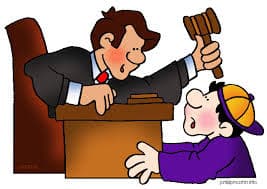
MELEKH: When we say “Melekh” we should not be thinking of a king from a fairy tale. We have to think more about a “Judge”. In a monarchical state, the King also acts as the Supreme Judge, the highest authority. The King renders the final verdict on the life or death of his subjects. These days we think of HaShem as the Supreme Judge, knowing that He determines whether or not we deserve the opportunity to live another year. On Rosh haShana, the Heavenly Court inscribes human beings in one of the two books: the book of life or the other book. But the final verdict is not sealed until the end of Yom Kippur. And I have to seriously consider the possibility that I am appealing a verdict that so far is negative, and I must convince the Judge that He should reconsider. I have one week to appeal to HaShem’s clemency and show that I sincerely regret the wrong things I did. During these ten days I have to show the Supreme Judge that I am capable of being a very good person. Yom Kippur is the day of the final appeal: I will stand before the Supreme Judge, acting as my own lawyer, imploring for my life.
QADOSH: “Qadosh”, is generally translated as “holy.” But in the context of this expression it means “unique”, “different.” In other words, we are saying that although HaShem is the judge, he is a very different judge, but different from a human judge. Why? Because HaShem is an invisible judge, whom we do not see, but who sees and knows what a human judge does not know and does not see. Unlike a human judge, HaShem knows what I do in private. HaShem is “unique” because He is a judge whom we cannot deceive with flattery … He is “unique” because nothing escapes His knowledge. Unlike a human judge, HaShem knows my thoughts, my intentions, and my potential.
ABINU: But if He knows everything about me, in what way will my repentance affect His final judgment and His verdict? HaShem as judge is also “unique” because He is my Creator: my father. When one of my children makes a mistake, the most important thing to me is to make sure that he or she has learned the lesson from that bad experience. And once I see that my son has learned his lesson and will probably never make the same mistake again, why would I want to punish him? If my son comes up to me, spontaneously, admits his mistake and shows me that he understands that he was wrong, I will happily hug him, encourage him and show him that I am happy that he has finally learned his lesson. Similarly, when we approach HaShem on Yom Kippur, He expects us to admit and confess our mistakes and transgressions, showing Him that we have learned our lesson. And if we do, He is ready to forgive us and spare us the punishment we deserve. Because apart from being our “Judge”, He is our Father: we are His children.
This tremendously important concept is indicated in the beautiful prayer that we say every day: ABINU MALKENU (our Father, Our King), “You are our Father, [apart from being] our Judge.”
 Rab Yosef Bitton
Fuente: halaja.org
