eSefarad Noticias del Mundo Sefaradi

By Eileen Wingard
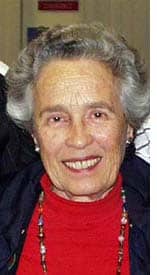 LA JOLLA, California — The exotic melodies and improvisatory style of Ladino (Judeo-Spanish) songs evoke the colorful bougainvillea and balmy nights of Spain, even though much of that music was composed by the Sephardic Jews after their expulsion. They were driven out of Spain in 1492, then from Portugal five years later. They fanned out to the Balkans and a few other countries in Europe, large numbers went to Turkey, which was then the Ottoman Empire and others settled in North Africa. The Holocaust destroyed many of those communities as well as those of their Ashkenazi brethren. However, Sephardic culture still exists and Ladino is still spoken and sung in a few places in the world such as Israel, Mexico, and the United States.
Twelve Ladino Songs will make up the playlist for the Treasures from the Music Collection Thursday, February 9, 2 p.m. in the Astor Judaica Library at the Lawrence Family JCC. This free program, co-sponsored by the JCC Senior Department, the Library and JLearn’s Sephardic Planning Committee, will feature the recorded voices of Nico Castel, Flory Jagoda, Gerard Edery, the Hora Jerusalem Choir, the Parvarim, Yoram Gaon and Carla Berg. Register here for February 9: https://my.lfjcc.org/12687/12689
As host of the program, I will be sharing the introductions with two guests, Brazilian-born Carla Berg, daughter of a Syrian-Jewish father and an Israeli-born mother, and Raulf Polichar, son of a Turkish-Jewish father and grandson of Sephardim from the Isle of Rhodes.
The presentation will include lullabies (Durme, Durme; Nani, Nani), liturgical works (Mizmor David, Eli Eliyahu), songs of longing (Adio Querida), of love (La Rosa Enflorece; Arvolicas de Almindra), of unrequited love (Mama Yo No Tengo Vista), a wedding song (Scalarica de Oro) a ballad about Abraham (Kuando El Rey Nimrod), and Hanukkah songs (Ocho Kandalikas; Nes).
Although many of the subjects and lyrics date back to medieval Spain, most took on their melodies in the Sephardic diaspora: from the Ottoman Empire, North Africa, and European countries such as Italy. For instance, the lyrics for Eli Eliyahu, written by the Spanish-Jewish medieval Poet, Ibn Ezra, was set to a melody that originated in Turkey and Adio Querida has a melody borrowed from Violetta’s aria in Verdi’s opera, La Traviata. Professor of Musicology, Edwin Seroussi, Director of the Jewish Music Research Centre at the Hebrew University, speculates that perhaps the music to Kuando El Rey Nimrod might have actually come from medieval Spain.
Among the songs Ladino singer Carla Berg will be introducing will be “Nes,” her original Hanukkah song, written in Ladino.
Raulf Polichar, retired nuclear scientist, was raised in a Ladino-speaking household in Los Angeles. He is an active member of JLearn’s Sephardic Committee and is currently working to bring an exhibition of Jewish life in Rhodes to San Diego.
This program is the second in a three part series of songs of our people. The first program, Yiddish Songs, was held January 5, with featured guests, Yiddish singers Elisheva Edelson, Deborah Davis and Elizabeth Schwartz. Their recordings are among the library’s music collection. The third event in this three part series will feature Israeli songs and will take place Thursday, March 9, 2 p.m. in the Astor Judaica Library.
Fuente: sdjewishworld.com