eSefarad Noticias del Mundo Sefaradi

אתם נצבים היום כולכם לפני ה’ אלוקיכם
JUDGEMENT DAY
 Rosh haShanah, the beginning of the Jewish New Year, is just a few days away. Starting a new year is naturally a cause for celebration and joy. And this year on Friday September 18 at night we will meet with our families to celebrate Shabbat and Rosh HaShana, and wish each other a very good 5781.
But not everything is celebrations and festivities when it comes to the Jewish New Year. For the Jewish people, Rosh haShana is also a very serious time. To the point that the Sages spoke more, much more, of the serious aspects of Rosh haShana than of the celebratory aspects. The rabbis of the Mishnah (200 CE) explained that Rosh haShana is nothing less than the day of judgment (יום הדין). What is the trial about? Examining our own lives; if we are going the good way or the bad way. And who judges us? Ourselves, in the presence of God!
This idea, “being in the presence of God,” is alluded to in the first pasuq of this week’s Parasha, which somewhat anticipates what will happen next week on Rosh haShanah.
OBJECTIVE SELF-JUDGEMENT
The judicial process begins on the day of Rosh haShanah. When we enter the Synagogue in the morning we should feel that we are entering the court of Law. The first challenge, and the most important one, is to identify the Judge who is present but is not easily “seen” . Why is it so important to discover the judge? Because self-judgment only makes sense if we evaluate ourselves objectively. And only when we are able to visualize that we are in front of God we might achieve objectivity. Why? Because He knows us perfectly. We cannot deceive Him, as one could fool a human judge. But “His Presence” forces us to be objective and prevent us from fooling ourselves. If we feel His Presence, our hearts will open completely before Him.
LIFE AND DEATH
Our Tefilot, prayers, help us to open our eyes and discover the Judge. In the prayers of Rosh haShana we repeat over and over the key word: “Melekh” (King, Sovereign) or Malkenu “(our King). For Jews the King is also the legislator; the final authority and the Supreme Judge. Among other attributes the King could condemn one of his subjects to capital punishment, or suspend his execution. And this is the key idea of Rosh haShana. Understanding that as a Judge, God can sentence us to lose our life during the next year, ח”ו. And on the contrary, if somehow our “destiny” ח”ו is capital punishment HaShem can commute our sentence.
SHOFAR
The most special moment of Rosh haShana is when we hear the Shofar (ram’s horn. This year, 2020, the Shofar will be heard only on Sunday, September 20, since on Shabbat the Mitzvah of the Shofar is suspended). Hearing the Shofar is like hearing the gavel, announcing that the heavenly court is in session. In ancient Israel, when a new King was crowned, the Shofar was blown to officially declare his new kingship. In the same way, when we listen to the Shofar we declare that we recognize God as our King / Judge. And if we DO NOT take this idea lightly, we will surely feel paralyzed, in shock or with goose bumps (or shaking or crying), out of fear that the Judge will not consider that we deserve another year of life. Or we might feel ashamed, since the Judge examining us knows us better than ourselves. If this happens, if we “tremble” when we hear the Shofar, it means that the Shofar is working well. And that we are correctly interpreting what its voice wants to tell us.
WAKING UP
While the Shofar sounds we DO NOT have to admit guilt, confess, repent or even ask for forgiveness. And I think it is unnecessary to explain that when one hears the Shofar one should not “ask” God for any requests …. All of that is very important, but it should NOT be done when one hears the Shofar. As we listen to the Shofar, Maimonides says , we should focus our efforts on “awakening”, that is, becoming aware that we are in God’s Tribunal, and we should do every effort to become aware of Who is presiding over the Court.
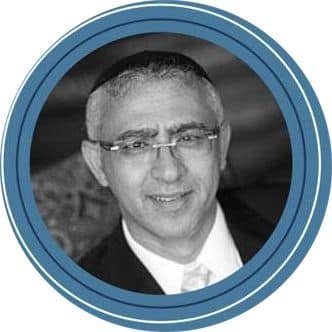 Rab Yosef Bitton
Fuente: halaja.org