 eSefarad Noticias del Mundo Sefaradi

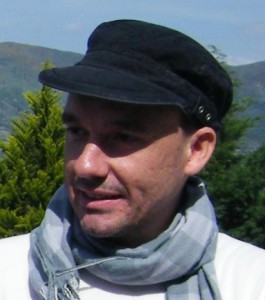 Juan Jose Ventura lays out an extensive and intricately detailed family tree on the table. He runs his fingers up and down the different lines of the tree’s meandering roots, past the tiny names and dates, as he traces his family’s Jewish lineage all the way back to 1484 in Spain.
Ventura’s family tree is a tremendously impressive piece of detective work, made all the more remarkable because it wasn’t until ten years ago, in 2001, that Ventura even suspected he had any Jewish background at all.
It began when Ventura, 35, moved from his native Cordoba, Spain, to The Netherlands to do his Ph.D. in Economics. Suddenly “all kinds of people started asking me out of the blue if I was Jewish,” he says. “They would say ‘maybe you’re Jewish and you don’t know.’ But I always answered them ‘no, it’s not possible.’”
Despite his protestations to the contrary, a seed had been planted, and Ventura was no longer so sure. Then, a chance meeting in Amsterdam with a young woman from Russia served as his personal tipping point. “She told me about people who were hiding their Jewishness in the Ukraine. ‘People like you,’ she said.”
Ventura was raised as a strict Catholic and, growing up, had no reason to think otherwise. He nevertheless asked the oldest person in his family – his great-grandmother – about their roots. He was shocked, yet also strangely relieved, when she revealed to him that, “yes, we are descended from Jews.” He ran to the local priest to confess, to tell him that, “I don’t think I’m a Christian,” he relates. But to his surprise, “the priest said ‘go ahead, you don’t have to be afraid. Just follow your path.’”
Ventura was in the process of discovering that he was a descendent of theBnei Anousim, Jews in Iberia who were compelled to convert to Catholicism 500 years ago and whom historians refer to by the derogatory termMarranos.
It was at this point that Ventura’s economics training as a researcher kicked in. At a family wedding, he grilled the elder women assembled – his mother, grandmother, and aunts. “It all started to come together,” he says. “Everyone had a little bit of information. We began writing a document.”
But anecdotal evidence wasn’t enough. Ventura needed proof. His first stop was the baptism records for Almagro, the city in the Cuidad Real region of Spain where his family comes from. Propitiously, there were many: when the Mormons came to Spain, they made copies of everything they could find and converted them to microfilm. In those records were family marriage and birth certificates going all the way back to 1720.
 Part of the Ventura family tree
In 2008, the Mormons put all their documents online. Ventura was now able to push his family lineage all the way back to 1580, to a woman named Isabel Nuñez and her husband Juan Cuchillero, whom she married in 1601.
Then Ventura discovered something surprising: Nuñez was not baptized, the first in all the records he’d searched. Was it a mistake; just a missing record…or something more? But the lineage ended there.
Ventura was despondent. “I got crazy,” he says. “I felt like I’ll never find out the truth.” But a colleague he met on the Internet suggested he look at records compiled by the Inquisition itself.
It turns out that Inquisition officials were scrupulous about documentation. Everyone who was ever put on trial or killed – thousands of Jews, Moors and others who were not Catholic – were duly noted by the Inquisition.
Through those records, Ventura made another discovery: Nuñez’s husband, Juan Cuchillero, had been the subject of a trial conducted by the Inquisition in 1621 regarding whether he had “clean blood.”
“Clean blood,” of course, is a metaphor for whether one comes from a non-Catholic background. To check, the Inquisition would interview everyone in a village and the results were, in true Inquisitorial fashion, written down in the record books. “Three witnesses from the village said that this man, Cuchillero, did not have ‘clean blood.’ Not only that, they very specifically said that he was descended from a Jewish family,” Ventura explains.
And since people without “clean blood” could only marry others with the same status, Ventura knew he had found what he was looking for: a Jewish connection that must go back for centuries more.
An ironic by-product: as part of the trial, the Inquisition built its own genealogy for the family; this tree reached another 96 years into the past, to 1484, when some members of Cuchillero’s family, the records indicate, were burnt at the stake in Ciudad Real.
Ventura is now convinced of his Jewish roots, but building a personal family tree is not enough. “I need someone official to make sure my research is correct, to validate it,” he explains. He has been in touch with a professor at the Hebrew University in Jerusalem and is anxiously waiting for the results, which he plans to share with rabbinical experts as well. That, he says, will help him be accepted by the wider Jewish community.
In the meantime, Ventura is living and working as an economist in the southern Spanish city of Seville. This has given him the opportunity to study with Rabbi Nissan Ben-Avraham, Shavei Israel’s emissary to Spain. Ventura showed Ben-Avraham his research which he told Ventura was “impressive.” He suggested Ventura contact Shavei Israel.
Ventura met Shavei Israel Chairman Michael Freund in May 2011 when Ventura attended the historic condemnation by Spanish officials in Mallorca of the infamous Auto-Da-Fe in 1691. It was on that day, more than three centuries ago, that 37 Chuetas, as the Bnei Anousim of Mallorca are known, were put to death for secretly practicing Judaism.
The formal Jewish communities in Spain are less than welcoming to Bnei Anousim and, until he can prove his authentic Jewish roots, Ventura has been unable to attend synagogue. “We have a small group of Anousimwho gather twice a month to keep Shabbat to the best of our abilities and sometimes to pray,” he says. He has stopped eating pork and seafood (“I never liked seafood so much anyway,” he quips), but finds buying only kosher food very difficult, as it must be all ordered and shipped from another city.
Ventura has learned a little Hebrew through a course given over the Internet. “I’m learning Biblical Hebrew,” he says, “so I can read the Torah.” Despite having visited Israel several times (“to participate in economics programs”), aliyah – and with it the need to speak modern Hebrew – is not on his agenda at the moment.
He enjoys reading Jewish books. The “Sefer Me’am Loez” – a 45-volume commentary on the Torah written in 1730 by Rabbi Yaakov Culi, originally written in the Sephardic Jewish language of Ladino and now translated into Spanish – is his favorite.
Ventura is single and hopes “to find a Jewish woman to marry.” Most important for him is to say, “I’m a Jew and I want to keep the mitzvot!”
With the astonishing tenacity he employed to uncover and ultimately embrace his past, there is little doubt that, with G-d’s help, Ventura will be able to extend his family tree into the future, planting new roots for the generations to come.
Brian Blum
Fuente: Juan Jose Ventura y Shavei.org
I am very interested in finding the documentation of the Spanish Inquisition. Are some/any of the notes on the Internet? Does anyone know how I can research this? Thanks very much.
Hi,
as far as i know there is a lot of documentation in Madrid in the Archives. But so far nothing online.
Juan José, me gustaría contactarme contigo para que des algunas indicaciones que me ayuden a completar un estudio sobre mi familia. ¿Podrías facilitarme un e-mail?
Cordialmente,
Alvaro Gargiulo
este es mi facebook….
http://www.facebook.com/venturamohato
y alli puedes encontrar mi email.
Hola:
Bueno ya sabes mi nombre, vivo en ensenada, baja california norte, mexico… somos una familia de 80 a partir de mis abuelos, pero no sabemos nada mas de nuestra familia.. estariamos muy contentos de poder encontrar nuestra historia..
comunicate
saludos
Caro Jose
Será que o ramo de sua família foi para a Italia. Nós somos os únicos Ventura judeus que moram no Brasil , vindos da segunda guerra da Itália e agora gostaríamos de comprovar nossa ascendência espanhola…
Abraços.
Vcs não estão sozinhos…
Somos Venturas judeus brasileiros com origem italiana tbm.
..