eSefarad Noticias del Mundo Sefaradi

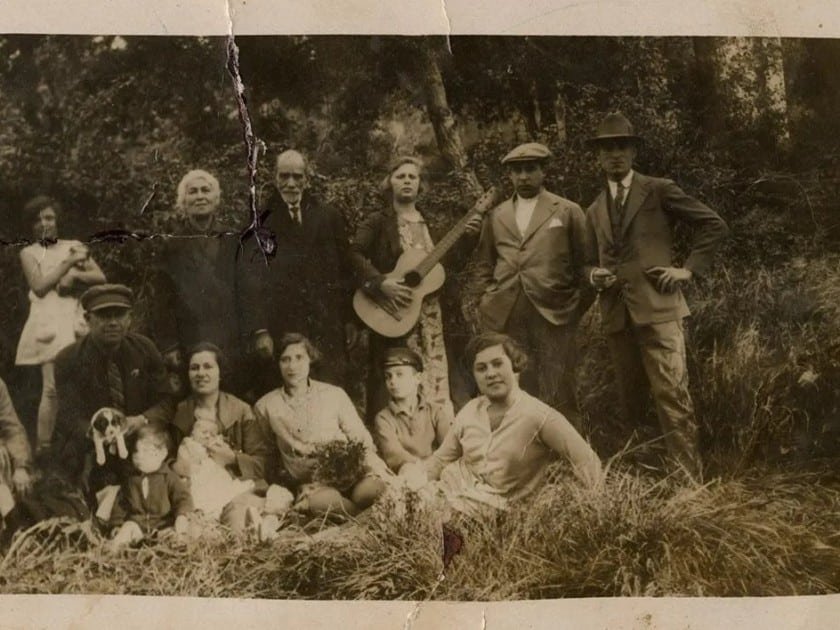
Barcelona, Courtesy of the author
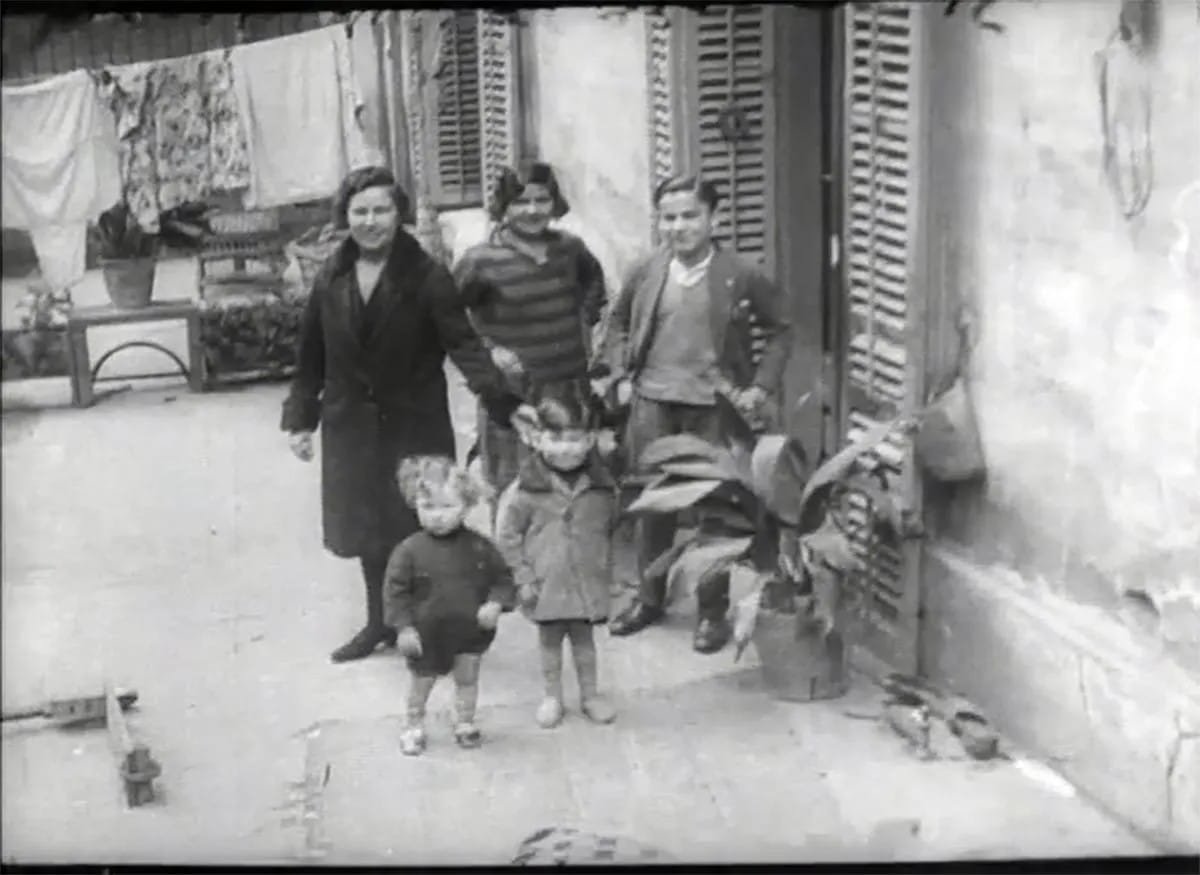
I was doing research for my novel Kantika— “song” in Ladino — when I stumbled upon a silent film from 1929 called “Los judíos de patria española,” or “Jews of the Spanish Homeland.” To my astonishment, it looked to contain unattributed footage of my relatives in Barcelona, where they’d moved in 1924 from Istanbul. Before my eyes stood a smiling woman in a black coat (my grandmother Rebecca?), and in front of her, two small boys (my uncles David and Al?), the younger with a mop of blond curls. “There’s even,” read the caption in Spanish, “a small oratory in current day Catalonia.” I knew from family stories that my grandmother’s father, Alberto Cohen, had spent more than a decade as the caretaker of a tiny, semi-hidden synagogue on Carrer de Provença. I knew they’d had a garden — it was his passion — and there, in the film, was a bearded old man in a cardigan shuffling among his plants, collecting sticks.
My grandmother used to tell me how when her son Al (named after her father, as was the custom) was small, he’d had a headful of blond curls, the color unusual for a Sephardic child. I’d seen a yellow curl preserved under glass next to his baby photo, the lock tied with a purple ribbon.
In the film, the family is not named. My grandmother was long gone by the time I started writing my novel Kantika, which uses her migration story as a springboard. I emailed the link to the film to my uncle David, who was ninety-two and sharp as a tack, and called to ask him to check his email. Ten minutes later, he called me back: “Holy cow! Where the hell did you find that? That’s me, walking across the screen! That’s — ” his voice broke for a moment; he’d left Spain for New York at age eight, never to see his grandparents again “ — me at Provença, the craziest thing.”
I’d been working on my novel for several years by then. Or decades, really, if you go back to 1985, when I was twenty-one and recorded my grandmother reminiscing about her life. Later on, when I recounted the story to others, people were skeptical: Are you sure — they went to Spain? Centuries prior, during the Inquisition, Spain had slaughtered, expelled, and forced Jews to convert. However,there was a short-lived law in the 1920s that promised Spanish citizenship to Sephardic Jews. My family had long flourished in Turkey, but after the collapse of the Ottoman Empire in 1922, they lost their fortune and had few options.
“Jews of the Spanish Homeland” runs for a little over thirteen minutes and is a deeply strange affair – from the opening shot of the filmmaker in thick, triangular glasses on a rooftop with a camera, to the plump rabbi laughing on a brass bed in the Balkans, to a man slitting the throat of a hen, and another man moving along a row of seated women, examining teeth. The camera travels the tumbled streets of the old Juderías of Toledo, Córdoba, and Sevilla. And at 5.34–¡mirar!–a little family, actual Jews living in Barcelona! I did some research on the filmmaker, Ernesto Giménez Caballero, and found out that he started as an avant-garde intellectual and eventually became a Fascist who tried to set Hitler up with the sister of Primo de Rivero, the dictator of Spain. Somewhere in between, Ernesto Giménez Caballero had the bright idea that Sephardic Jews, supposedly nostalgic for their “lost homeland,” could be enlisted to help a weakened Spain regain power in trade abroad, but his admiration was short-lived. When the tide turned against the Jews, so did he.
In my novel, Ernesto Giménez Caballero knocks on the door of the unmarked little temple. Rebecca poses for him. Her father, Alberto, senses that something is off and tells the filmmaker to put his camera down. Giménez Caballero persists. Deals are made, bargains struck. Alberto plays his ney, a Turkish flute made of reed, for the filmmaker. They discuss poetry. Rebecca flirts. Underneath, something else is happening. The scene is my invention. In real life, I just know that my family was there, and so was he.
In 2021, as my uncle David lay dying in a hospital bed in Chicago, I FaceTimed him from Boston and read aloud to him from Kantika. There he was in my novel, through the stories he’d told me: a small, happy child in Spain catching snails with his grandmother on the rain-slicked streets; an angry boy struggling to learn English in New York; a frightened sailor on an aircraft carrier under attack in the Pacific. He had no memory of a tall filmmaker training a lens on him, but he remembered the giant palm tree at the hidden temple, the glass shards his grandfather installed in cement on the garden walls to keep intruders out, and the Ladino kantikas his mother sang him: Durme durme sin ansia i dolor, sleep sleep without worry or pain. It was our final conversation (though I haven’t stopped talking). Use my real name, my uncle said.
———————————-
Elizabeth Graver’s fifth novel, Kantika, was inspired by the migration story of her Turkish Sepharic grandmother, whose journey took her from Turkey to Spain, Cuba and New York. Turkish, German and audio editions are forthcoming. Her novel The End of the Point was long-listed for the 2013 National Book Award and selected as a New York Times Notable Book of the Year. Her other novels are Awake, The Honey Thief, and Unravelling. Her story collection, Have You Seen Me?, won the 1991 Drue Heinz Literature Prize. Her work has been anthologized in Best American Short Stories, Best American Essays, and Prize Stories, the O. Henry Awards. She teaches at Boston College.
Fuente: jewishbookcouncil.org