 eSefarad Noticias del Mundo Sefaradi

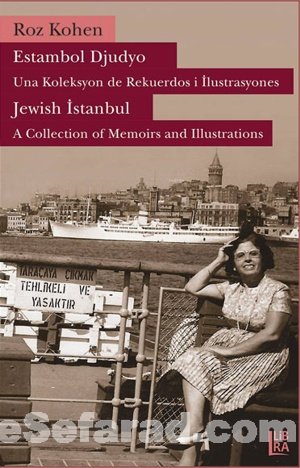
Jewish Istanbul is about the folkloric culture of its Jews and their language that survived over five centuries within the perimeters of the multicultural city of Istanbul, throughout the reign of the Ottoman Empire into the 20th century.
It is about the journey of Judeo-Spanish, the language brought to the Ottoman Lands by the Jews expelled from Spain and Portugal following the Inquisition and their expulsion in 1492.
The collection of childhood memoirs, originally written in Judeo-Spanish pay homage to this endangered language that was last transmitted to the Jewish baby boomers of Istanbul, while the life of the 1950s and 1960s still carried remnants of this unique culture with long history. The English translation is for the future generations to explore the language and the folklore of the Jewish Istanbul as it was once experienced by the multilingual and multicultural Jewish children of Istanbul.
Index
 Glosaryo / Glossary
- Prefasa / Preface
- Introduksyon / Introduction
- «Yo So Romano» / «I Am Romano»
- Letche de Azno / Donkey’s Milk
- Banyo de Chinko / The Zinc Baby Tub
- El Apartamento Andjelo / The Apartment Named «Angel»
- Mi Madre i la Estorya de Djoha / My Mother’s Joha Story
- El Enkontro / The Encounter
- Purim / Purim
- El Misteryo de la Guante / The Mystery of the Mitten
- Mamuazel / Mademoiselle
- El Mupak / The Kitchen
- Sovre el Azno i Aznedades / About Donkeys
- Leon el Barragan / Leon the Warrior
- La Makina / The Sewing Machine
- Djamila «a Media Luz» / Djamila «at Dim Lights»
- Un Paseo de Hamam / The Visit to the Hamam
- Namer el Endevino / Namer the Fortune Teller
- Un Meldado / A Memorial Commemoration
- La Tant Sarina / Aunt Sarina
- La Butika de Musyu Navon / Mr. Navon’s Shop
- Los Sedakeros de Apollon / The Beggars of Apollon
- Puncha Kulo / The Stinger
- La Vava de Varna / The Granny from Varna
- La Partensia de Leoniko / Farewell to Leoniko
- Ansi Pasavan los Diyas / Life Goes On
- El Primo de Beyrut / The Cousin from Beirut
- Sinema Andjelo Muevo / A Movie Theater Named Angel
- Prinkipo / Prinkipo
- Mansur el Loko / Crazy Mansur
- Serenas de Mar / The Mermaids
- La Jetée / The Jetty
- Ya no Bayla Mas El Lonso En Bostandji / No More Dancing Bears in Bostanc?
- La Lisyon Partikular / Private Tutoring
- Las Gözlemes de Madam Sima / Mrs. Sima’s Fritters
- La Haftona Ke No Komi / The Skipped Whacking
- La Biblioteka / The Bookcase
- Un Balo i Su Pintura / The Children’s Ball
- Las Letras de mi Madre / Mother’s Letters
- La Fotografiya / The Photograph
- Indiana de Fierro / Have You Had «Demirhindi» in ?stanbul?
- Moda Mueva / Brand New Fashion
- Las Dos Amerikanas / The Two Americans
 Glosaryo / Glossary
Fuente: librakitap.com.tr
The Judeo-Spanish legacy is shared by all the Jewish communities originating from the Iberian Peninsula. Sephardic heritage continued to maintain its existence even after the Expulsion and was transmitted down the generations through the use of the Judeo-Spanish language. Thus, a heritage of traditions, romances, songs, stories and proverbs has survived the centuries. Although it has gradually lost its popularity, Judeo-Spanish constitutes the stronghold for the preservation of the Sephardic identity.
Until recent decades, literary creativity in Judeo-Spanish was limited to religious works, legends, informative articles, novels or dramatic excerpts translated or adapted from other languages. The publication of memoirs by members of the Sephardic communities is a relatively new phenomenon. They differ from previous works by being the creative expression of intimate experiences engendered by the nostalgia for a past existence and the grief of its vanishing.
Besides its literary value, Jewish Istanbul emerges with the merit of being a distinctive documentary work. Jewish Istanbul also represents an achievement in the mission to transmit a segment of the Sephardic Jewish experience and contributes to its integration within our heritage.
Thanks to Roz Kohen for her achievement.
Gad Nassi