eSefarad Noticias del Mundo Sefaradi

BY BRANDI KRUSE
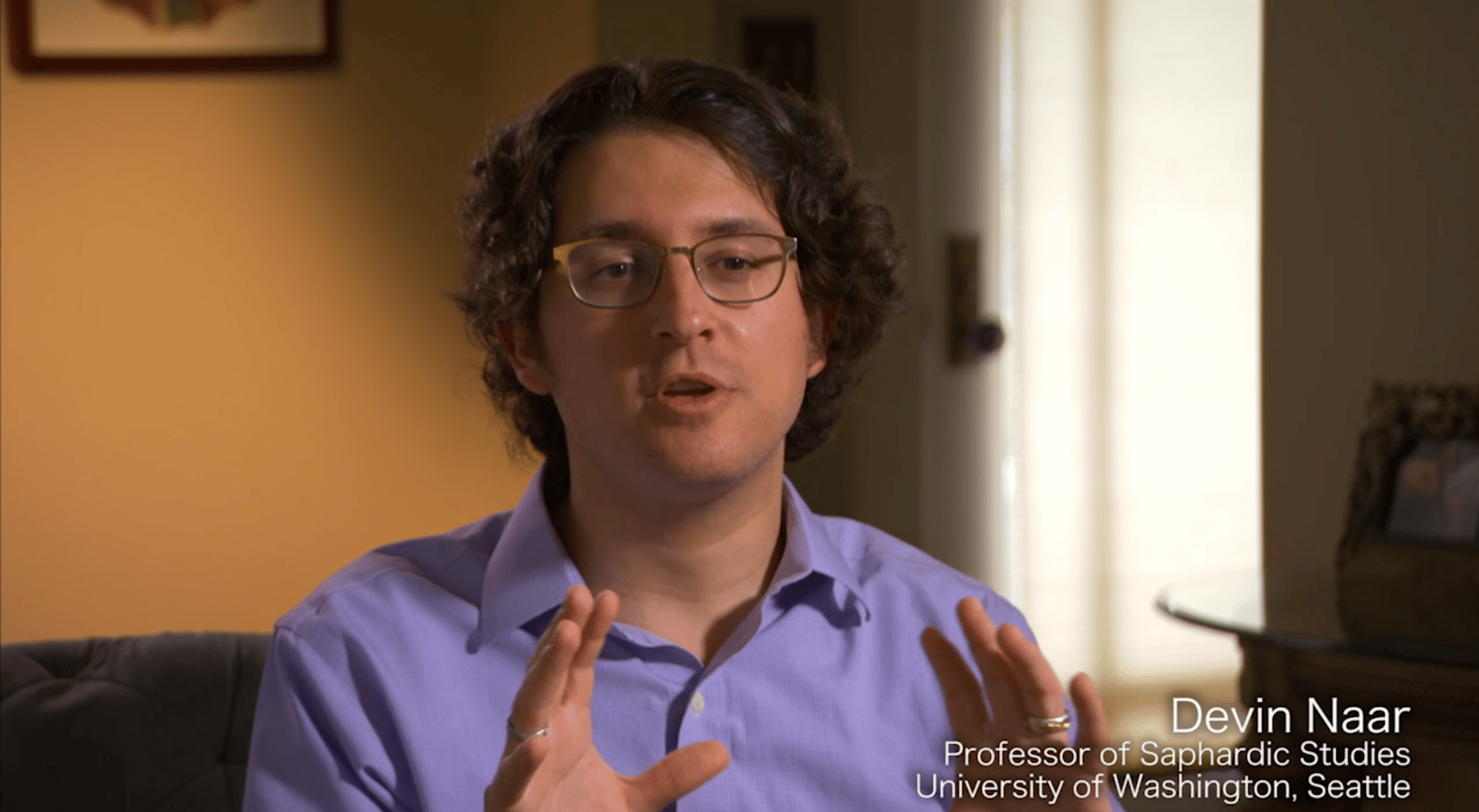
After embarking on an endeavor to understand his own legacy, a University of Washington professor has set out to preserve a historic Jewish language that was nearly decimated during the Holocaust.
It is estimated that fewer than 150,000 people worldwide still speak Ladino, a Sephardic language that is also known as Judeo-Spanish. In contrast, there are an estimated three million Yiddish-speaking Jews, according to UNESCO.
In 1492, during the rule of King Ferdinand and Queen Isabella of Spain, Jews and Muslims were forced into exile in an attempt to unite the kingdom under Christianity. Ladino became the language of those whose Jewish ancestors settled in portions of the Ottoman Empire that would become modern day Greece, Bulgaria and Turkey.
Devin Naar, The Marsha & Jay Glazer Assistant Professor of Jewish Studies and assistant professor of History at the University of Washington, can trace his ancestry back to the Ottoman Empire. His grandfather was a Ladino-speaking Sephardic Jew who was born in Salonika, Greece and immigrated into the U.S. at the age of 7.
Growing up in New Jersey, Naar heard his grandfather speak Ladino, although he had forgotten much of his native tongue over time.
“With the desire to become American, to fit in and become like everyone else, immigrant languages often fall by the wayside within a few generations,” Naar said. “The story of the Sephardic Jews is no different.”
But while Ladino lost many speakers to assimilation, it lost many more to the Holocaust. Roughly 100,000 Ladino-speaking Jews from cities such as Salonika and the island of Rhodes perished during World War II. Naar’s own uncle and his family were killed at the concentration camp in Auschwitz.
As Naar became curious about his family history, he began to practice reading, writing and speaking Ladino.
Soon, every Friday afternoon before the Jewish Sabbath began, Naar would call his grandfather. It became a “tradition” for the two to exchange pleasantries in Ladino.
“What’s going on?” his grandfather would say in his native tongue.
“Everything is good,” Naar would say back, speaking Ladino.
“It was an absolute thrill, I think. He really loved it,” Naar said. “He really looked forward to it and so did I.”
It was almost fate that Naar would end up in Seattle, a city with the third-largest population of Sephardic Jews in the United States behind New York and Los Angeles.
But of the 40,000 Jews living in Seattle, only 10 percent are Sephardic and very few of those can still speak Ladino.
One of few people in the world who can read, write and speak the language, older generations of Sephardic-Jews began to ask the 29-year-old Naar to translate family documents. They would approach him at Synagogues or during a meeting of Jewish community members on Tuesday mornings in the old Central District.
“They started bringing me these documents because they couldn’t read them, and they were very interested to learn what they said.”
While he has been in Seattle for less than a year, Naar has been given dozens of books, poems, plays and hundreds of other documents written in Ladino.
He has read through a series of letters written in Ladino by a 9-year-old girl who lived on the island of Rhodes during Nazi occupation in the 1930’s . She wrote dozens of letters over several years to relatives in Seattle.
“She winds up orchestrating, through her own correspondence, her family’s escape from Nazi-occupied Rhodes and they are able to travel to safety and be reunited with her family in Seattle,” Naar said.
The letters, and boxes of other documents in Naar’s office, will be scanned page-by-page into a computer. They will soon become part of the Seattle Sephardic Treasures Project; the first ever online resource dedicated to preserving the Ladino language.
Fuente: mynorthwest.com