 eSefarad Noticias del Mundo Sefaradi

 Orizontes, a new online Ladino magazine launched this past summer in Jerusalem, seeks to change the image of that language.
Unlike most Ladino publications, which dwell on the nostalgia of the old days of the Sefardic diaspora, Orizontes wants to attract a new generation of Sefardic readers and writers. Proof of that is the age of the writers in the first issue: of the 14, 11 are under 40 years of age. The magazine’s mission is stated on the cover: Una Revista de Kreasion Manseva (A magazine created by young people).
According to Matan Stein, one of the two editors, Ladino is a modern language whose horizons go beyond Sefardic life and history, and that can tackle other topics as well as “human life in general.“
The 36-page issue features an eclectic lineup of writers from Argentina, Costa Rica, Hungary, Israel, Serbia, Sweden, Turkey and the United States. The topics covered include fiction, poetry, first-person accounts, travelogs, and translations of tales by Hans Christian Andersen and Lafontaine into Ladino. The issue’s theme is empesijos,(beginnings), which each writer interpreted their own way. The second issue is in preparation.
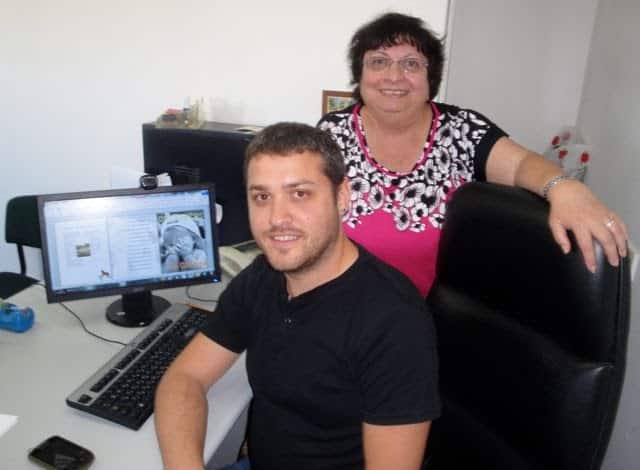
Orizontes, which is published under the auspices of the Jerusalem-based National Authority of Ladino (Autoridad Nasionala del Ladino), was conceived and designed by Stein, 31. Born in Jerusalem of Ashkenazi parents, Stein studied Linguistics, Ladino and Egyptology at Hebrew University, in Jerusalem, and is currently studying Biblical Studies and Jewish History at the Schecter Institute. He started working at the Authority two years ago. Dolly Burda, the other editor, was born in Cuba.
rizontes’s address is http://issuu.com/matanstein/docs/orizontes_1_komplido
The interview with Stein and Burda was conducted in Ladino at the magazine’s offices on King George Street in Jerusalem. Following are excerpts (an English version follows the Ladino text).
Kolsefardim: Porke el nombre Orizontes?
Matan Stein: Porke keremos mostrar ke el ladino tiene munchos mas orizontes i no solo sovre la vida sefardita, i ke tambien puede okuparse de temas aktuales.
Dolly Burda: Matan eskrivio a muncha djente por el internet demandando un nombre para la revista i resivimos munchas repuestas de todo el mundo. Ama mos plazio Orizontes, ke fue propozado por Medi Koen, una aktivista de Ladino aki en Yerushalaim, porke reprezenta el futuro. Los orizontes del ladino estan aviertos.
KS: El tema del primer numero fue empesijos. Kada numero va a tener un tema?
MS: Mos intereso el tema de empesijos porke es el primer numero de la revista. Esperamos tener uno para kada numero.
KS: Komo toparon los eskritores para el primer numero?
DB: Mandimos un avizo por Facebook diziendo ke estavamos muy interesados en resivir artikolos i material para una mueva revista i ansina fue ke munchos se interesaron, en espesial los mansevos, lo ke mos dio muncha alegriya porke este es el buto de la revista.
KS: Ay un interes de los djovenes por el ladino?
MS: Esta revista es un enshemplo de este interes. Si bushkas en el internet, toparas munchos sitios sovre ladino. En Facebook, espesialmente, ay foros de djovenes ke avlan ladino o ke se interesan por el ladino o ke se okupan kon el ladino.
KS: Kuala sera la frekuensia de la revista?
MS: Ke el Dio kera, dos vezes al anyo por el empesijo. La publikaremos kuando tengamos material sufisiente. Munchos mos embiaron tambien artikolos para el proksimo numero.
DB: Todo depende del numero de artikolos ke resivamos. No ay menester de publikar en papel agora porke por el internet podemos arivar a un publiko mas ancho i es de baldes.
KS: Kada numero va a tener eskritores diferentes?
DB: Mos vamos a alegrar de resivir material de eskritores ke ainda no konosemos i tambien de los ke ya eskrivieron.
KS: Los artikolos del primer numero fueron eskritos originalmente en ladino?
MS: La grande parte. El buto es mostrar el ladino komo es oy i los diferentes estilos rejionales sin djuzgar si es mas korekto o menos korekto. Kijimos krear algo libre en estilo. Por enshemplo, no kitamos biervos de orijin turko o ebreo porke son parte de la alma del ladino. Por eso es muy importante para mozotros konservar estos biervos i deshar a los eskritores uzarlos.
Para mi es importante tambien krear una atmosfera mas manseva en la revista i ese es el buto sentral. La djente save agora ke ay kreasion mueva en esta lingua.
Tambien keremos tornar a uzar las letras Rashi, kon las kuales se eskrivia el ladino oridjinalmente, i no solo usar las letras latinas. Kreygo ke kuando empesimos a uzar las ketras latinas algo de la karakteristika djudia del ladino se pedrio. El yiddish no la pedrio porke mantuvo las letras ebreas. Komo pudites ver, eskrivi mi introduksion a los meldadores de este numero en las letras latinas i Rashi.
ENGLISH
Kolsefardim: Why the name Orizontes?
Matan Stein: Because we want to show that Ladino’s horizons are wider, and that they extend beyond Sefardic life, and that Ladino can tackle current topics as well.
Dolly Burda: Matan wrote to many people on the Internet asking them to suggest a name for the magazine and we received many responses from all over the world. But we liked Orizontes, which was suggested by Medi Kohen, a Ladino activist based here in Jerusalem, because it represents the future. Ladino’s horizons are open.
KS: The first issue’s theme was empesijos (beginnings). Will each issue have a theme?
MS: We were interested in the theme of beginnings because this is the first issue of the magazine. We hope to have a theme for each issue.
KS: How did you find the writers for the first issue?
DB: We posted a note in Facebook saying that we were very interested in receiving articles for a new magazine, thus many expressed interest, especially young people, which gave us a lot of joy because that’s the purpose of the magazine.
KS: Is there any interest among young people for Ladino?
MS: This magazine is an example of that interest. If you look in the Internet, there are many sites about Ladino. In Facebook, especially, there are groups of youngsters that speak Ladino, or that are interested in Ladino or that have something to do with Ladino.
KS: What will the frequency of the magazine be?
MS: God willing, twice a year at the beginning. We will publish an issue when we have enough material. Many also sent us articles for the next issue.
DB: It all depends of the number of articles we receive. It’s not necessary to publish on paper today because we can reach a wider public on the Internet and it’s free.
KS: Will each issue have different writers?
DB: We’ll be happy to receive material from writers we don’t know yet and also from the ones that already wrote.
KS: Were all the articles for the first issue written originally in Ladino?
MS: Most of them. The purpose is to show Ladino the way it is today and the different regional styles without judging if it is more correct or less correct. We wanted to create something that is not tied to a style. For example, we didn’t delete words of Turkish or Hebrew origin because they are part of the soul of Ladino. That’s why it’s important for us to keep those verbs and let the writers use them. It’s also important for me to create a more youthful atmosphere in the magazine and that’s the main purpose. People now know that there is new creativity in this language.
We want to go back to using Rashi script, with which Ladino was written originally, and not only Latin letters. I believe that Ladino lost something of its Jewish character when we started using Latin script. Yiddish didn’t lose it because it kept the Hebrew letters. As you saw, I wrote the introduction to this issue in both Rashi and Latin characters.
© Daniel Santacruz October 2013
Fuente: kolsefardim.net

Me plaze mucho ke komensara Orizontes, este muevo magazine.
Vosh suheto mucha reushita, mazal bueno i ke lo veigamos todos i puedamos meldarlo i ainda eskrivirvosh algo. Saludosos ke vos veigamos.
Es muy grato cuando se encuentran blogs de excelencia y que dan gran valor,
si no hay traba voy difundirlo en mi Facebook y claramente me guardo el link.
Muchas gracias Matilde!