eSefarad Noticias del Mundo Sefaradi

 En esta seksion, muestro kerido amigo Yehuda Hatsvi un estudiozo de la tradision, del penamiento djudio i de la Ley, kada mes va a partajar kon todos mozotros sovre variados temas desde su punto de vista djudio i sefaradí. Yehuda es aresivido en Ekonomia de la Universita de Tel Aviv, puvliko un libro de istorias folklorikas sefaradíes para ninyos, sus artikolos i konsejas aparesen en munchas puvlikasiones komo por eksemplo Aki Yerushalayim i El Amaneser, i es uno de los moderadores de Ladinokomunita.

Ladino e Ingles
«Entre Sefarad i Ashkenaz»
Una vez mas vengo a darvos, (kon la kortezia del autor), las fojas de una konferensia interesante ke se dyo en el kongreso de genealogia judia (en Yerushalayim), kon el tema «Entre Sefarad i Ashkenaz». En su konferensia mos konta el Dr. Zvi Keren la istoria de su famiya, empesando de su nona Reina Alkalay.
El Dr. Zvi Keren, es nasido en Sofia, Bulgaria. Komo un autor i istoriador, aze mas de 20 anyos ke se okupa en la investigasion i la dokumentasion de todo lo ke konserna a la estoria i kultura de los judios de Bulgaria. Es autor de unos kuantos livros, i muchos artikolos, en el sujeto.
El teksto esta eskrito en «primera persona» komo ansi lo avia relatado el Dr. Keren:
«Tratare de kontarvos un poko de la istoria de mi famiya, i kombinar algo de mi eksperiensia komo investigador i istoriador, koza ke me ayudo a deskuvrir fatos ke eran deskonosidos.
Al pareser es una istoria simple de una famiya judia de Bulgaria entre el siglo 19 i el siglo 20: vida judia regular komo se uzava en las komunidades judias basho el dominio del Imperio Otomano.
Lo mas de los judios eran komersiantes o lavoravan en ofisios simples, i sus situasion ekonomika era difisil.
Vengo a mostrarvos komo se interrumpio la vida pasifika de mi famiya, kuando el amor vensio a la tradision. Esta fue la istoria de mi avuela (nona) i su novio elijido, sus sesh ijos, i despues las tensiones ke uvieron durante el vagabundeo forsado de mis djenitores, tambien por kavzo de estos konfliktos – aviertos i okultos.
Me konsentrare en la situasion de las mujeres en partikular. La istoria de mi nona Reina Alkalay, i la istoria de mi madre, Rebeca Zilberman.
Tensiones egzistian antes de todo entre rikos i proves. La komunidad judia de Ruschuk (oy yamada Russe), situada a la kosta del rio danubio, en el norte de Bulgaria, estava en rebuelta:
Es verdad ke ya avian i en el pasado kazamientos entre los sefaradim i los ashkenazim, ma esta vez se tratava de una de las famiyas de la aristokrasia sefaradita, la famiya renomada de Alkalay. Los de esta noble famiya no kijeron, de ninguna manera, akseptar un tal kazamientro entre Reina i akel Mayer Zilberman, un judio prove, boyadji en su ofisio, i…ashkenazi.
Ma mi avuela, malgrado todos los akavidos i reproshes, desho atras toda la rikeza familial, i prefero a kazarse kon su amante. En konsekuensia, toda sus vidas paso en povreza i estrechura.
En el «pinkes» (kuaderno) antiguo de la komunidad, eskrito todo en solitreo, topi los nombres de mi avuela Reina, mi avuelo Mayer, i sus ijos. Mi madre Rebeca ke fue la behora, nasio en 1896.
Es kuriozo, ke segun los dokumentos ke en el Pinkes, estava eskrito ke Rebeca nasio en la sivdad de Razgrad (i no en Russe). Despues de tiempo deskuvri ke mi nono, siendo ke era boyadji, fue embiado a Razgrad (60 kilometros de Russe) a lavorar en el guarnizon (distrikto militar) en esta sivdad; naturalmente ke Reina -ke en akel anyo eya estava prenyada- fue aya djuntos kon el, i ayi pario a mi madre Rebeca.
Kuando, en 1981, gano el autor judio Elias Canetti el premio Nobel, le di este haber a mi madre kon grande alegria. Mi madre sonriyo, i me konto ke en su chikez morava la famiya (kon otras mas famiyas) en el mezmo kurtijo ande morava i la famiya Canetti. Las famiyas no se frekuentavan siendo ke los Canettis eran de los rikos.
En uno de mis viajes a Ruschuk pasi a ver la kaza ande nasio Elias Canetti. En efekto, avia un kurtijo -halis komo me avia kontado mi madre- en la kaye de Gurko numero 13 (ke antes se yamava Arik Ramazan).
En uno de estos apartamentos morava, en el fin del siglo 19, la famiya Zilberman, sin saver ke uno de sus vizinikos rikos va obtener una fama mundial.
Mi madre termino sus estudios en la eskola almana de komercho en Ruschuk en 1912. Eya era la unika ninia en la klasa. En esta klasa estudiaron tambien otros dos ninios judios. Uno de eyos era Benjamin Shoeff, de una famiya sefaradita onorada. Rebeca i Benjamin eran buenos amigos, ma Rebeca prefero a kazarse kon Haim Kurtzberg, un mansevo simple de Varna.
La istoria del kazamiento eskandalozo de mis avuelos, ke de antes 25 anyos, se repeto aki una vez mas.
Mis djenitores, Rebeca i Haim, se kazaron en 1921. La parnasa era muy difisil, i kon el tiempo pasaron todos los miembros de mi famiya a Varna. Al pareser ke el «herem» de al tiempo sovre mi nona Reina, kedo komo una solombra pezgada.
En el anyo 1923 pasaron mis djenitores a bivir en Bucarest, ayi topo mi padre un lavoro komo elektrisien en una fabrika de asukar. Ayi bivieron asta 1928,
Estando mis parientes en Rumania, resivio mi madre una invitasion a tomar el posto de sekretaria jeneral de la eskola Notre Damme de Sion, en Izmir, Turkiya. Mi padre servio ayi komo ovrero de entretenimiento, i asi pasaron aya algunoa 8 anyos.
La edukasion de mi madre, i su konosensia «a la perfeksion» de siete linguas, i las abilidades teknikas de mi padre, mijorearon la situasion ekonomika de la famiya. Ma, un proyekto agrikolo de mi padre, kavzo una piedrita grande de paras, i pusho a la famiya a tornar (a fin de 15 anyos) a la kapitala de Bulgaria, kon sus dos ijas. Una vez mas, proves. Yo nasi en Sofia (en 1935).
Mi famiya, komo la mayorita de los judios de Sofia fuemos ekspulsados en 1943, durante la Segunda Gerra Mundial, a la sivdadika de Pleven. Despues de la gerra, kuando tornimos a muestra kaza en Sofia,
la topimos bien guadrada por un amigo bulgaro.
En el invierno de 1945 arrivimos (kon el vapor «Transilvania») al porto de Haifa, kon otros muchos Olim.
En el Kibutz «Kfar Menahem» ande bivo yo kon mi famiya, pasaron mis djentores los 35 ultimos anyos de sus vida, kon paz i trankilidad.»
———————————————
En basho vos do una una buena traduksion al inglez de la konferensia de Dr. Zvi Keren:
Between Sephardic and Ashkenazi
My Family Wanders Following Inter-Ethnic Tensions
Dr. Zvi Keren
Introduction
I will try to relate a bit of my family’s history and integrate my experience as a researcher and a historian, a discipline which helped me uncover some facts that had been unknown to me.
On the surface, we are dealing with an ordinary story of a family from Bulgaria, in the transition from the 19th and the 20th centuries: Jewish life under Ottoman Empire – an organized community with public institutions and education systems, together with the weakening of the communities with the decline of theOttoman Empire and central government.
Most Jews were merchants or they engaged in crafts, and their economic situation was dire.
By presenting their stories, I wish to show how my family’s peaceful life was turned over when love overcame tradition; the history of my family, including dilemmas, presenting the story of my grandmother and the man she loved, and the way they raised their six children, the tensions during in the 15 years of wandering, which was imposed on my parents, mostly due to those overt and covert conflicts.
The article mostly focuses on the state of women. I introduce the story of my grandmother (of the Alkalay family), and my mother (of the Silberman family). I will show, how compared to most women, the latter was fortunate due to her intellectual capabilities and knowledge of languages, and finally, I will focus on the association between historical research and examination of documents and family stories, myths and traditions that pass from one generation to the next, their accuracy and authenticity.
Tension and Shunning in the Family
The First Generation in the Family Narrative
There were tensions between people of power, due to their wealth and the low class, those who have known nothing but a life of poverty.
The whole Rusçuk community was astir, (today Pyce, Bulgaria¨). Indeed there were cases of «deviation from tradition» – marriage between the members of the Sephardic community with those of the Ashkenazi community, but this time the case concerned one of the noble Sephardic families. For years, the most esteemed people in the community were members of the Alkalay family, the family of my grandmother, Reina (queen in Ladino).[1]
Rumors and gossip became a reality. This respectable family would not accept them. In the eye of the storm was my grandmother, Reina, who was considered the «queen of the family». My grandmother was born in Russe on1875. She withstood economic hardship as part of her life with my grandfather, the man she loved, while raising their six children.
My maternal grandmother defied the decree of her family, which was one of the wealthiest in the Rusçuk (Russe) community, on the banks of the Danube, in the north ofBulgaria. She preferred the heartbeats of love to her father’s threats that she would be disinherited of the pleasures of the family’s wealth should she prefer her poor, and heaven forbid, Ashkenazi, beloved…
Despite the «Shidduch» (match-making) awaiting her with one of the Sephardic youths, about to be announced, my grandmother, defiantly stated she wanted to marry the man she loved, who was indeed 15 years older than her, but she wanted him and no one but him! To her family, my grandmother’s choice had numerous disadvantages beyond age difference, first because he was of Ashkenazi origin, and as if that was not enough, his family was one of the poorest in the community…his occupation was nothing to brag about either – the man made his living painting houses. Despite all attempts to dissuade her, and her father’s threats, my grandmother would neither budge nor listen – she chose Mayer Silberman to be her husband. A simple story…
Indeed, unlike Agnon’s Hershel, the «Nebech«[2], the woman here knew exactly what she wanted and even got it! As it were, «I held him and would not let him go until I had brought him unto my mother’s house and into the chamber of her that conceived me».[3]
Her father (whose first name I do not know despite my endless efforts to find it in the Russe archives) announced she was shunned from the family and disinherited[4] I have heard this from my mother more than once, but all attempts to hear my grandmother tell about her family that had treated her in this way hit a wall of silence.
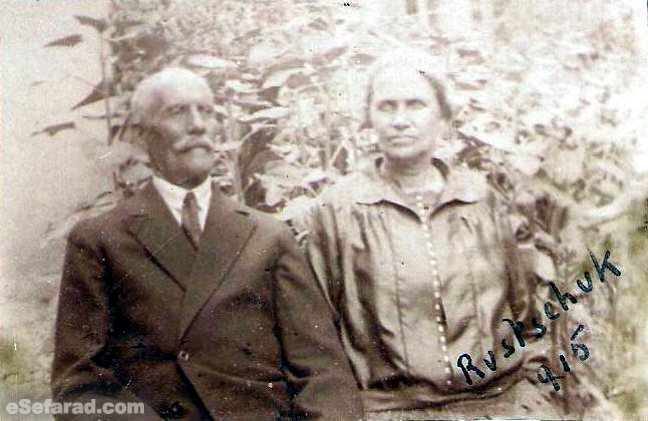
I learnt about the Alkalay Family’s status in the community much later, after my grandmother and mother had passed away.
When I was writing my Ph.D about the community where all this had taken place (The Jewish Russe community), putting aside my emotions and family ties to the place, my grandmother’s maiden name appeared numerous times.[5]
The fact my mother kept repeating was that the Silbermans lived their whole life in dire conditions. They had six children, and my mother, Rebecca (Rivka) was the eldest. The names given to the children constitute an interesting phenomenon which was not at all typical then: Rivka, Abraham, Isaac and Jacob. The other two girls were named Mathilda (or «Mazal»- in Hebrew luck) and Sharlotta. Four of the names are Biblical. None of the children were named after their grandparents. My mother mentioned that, explaining the reason was probably due to her grandfather’s knowledge of the Bible and insisting those would be the names of four of his grandchildren. An additional reason could be that it was a common practice among Sephardic Jews to give the children the names of their grandparents while the latter were still among the living.
In the old community book, written in Solitreo script[6], which I found in the course of my research, I found the names of my grandmother, my grandfather and their five children (my aunt Sharlotta was not on the list yet). My mother, (their first born) was born in July 1896, so the mayhem around my grandmother’s marriage took place about a year earlier. One fact triggered my historian’s sensors: the entry read that all family members were born in Rusçuk except one – my mother, the eldest daughter. In all of her stories, she never mentioned that she was born in Razgrad. The date of birth was also different from that on her tombstone, but the great riddle is that of her place of birth. With the help of a friend, a doctor in the city of Razgrad, I received a copy of her birth certificate, issued as written in the community book in Rusçuk, and the same date written in the book…
As my parents were deceased, the only person I could still ask was my mother’s youngest brother, Jacob. He clearly stated that was a mistake, as his sister, just like the other members of the family, was born in theDanubecity. Once I showed him the evidence in the community book, he raised the reasonable argument, that since his father was a paint contractor (I found documentation regarding that face in the Russe archives), and since during that time, the Bulgarian army built army camps in the city of Razgrad, some60 kilometersfrom Russe, Silberman, the painter, took his wife, who was pregnant and traveled there with her.
At that time, Razgrad was the city and county, of which Russe was part.[7] The couple stayed there for a while, and during that time, my mother was born. When the job was done, the family returned to Russe. «That is why,» explained my uncle, «We had never thought our older sister was born anywhere else.» As for my mother’s date of birth, I could find no explanation. It is not the result of the differences between the Julian date, which was then used in Bulgaria and the Gregorian one, as if that had been the case, the difference would be 12/13 days, and not 18 days.
When the Jewish Bulgarian writer, Elias Canetti was awarded the literature Nobel Prize, I was happy to report to my mother that someone from her city gained international respect. To my surprise, she gave me one of her calm smiles, and said, «In my youth, actually, until I married your father, I lived with my family at the same court (Hazer, in Hbrew) with the Canettis. There were a few families, but there was hardly any communication between us, as they were wealthy, and we…you know…». After thinking for a while she said, «I remember the boy, Elias, but they left when I was at school, and I have never heard about them since then. I am happy to hear about his success.»[8]
In one of my visits to Russe, I asked to visit Elias Canetti’s birthplace, and indeed, there was a court in 13 Gurko Street (former Ar?k Ramazan), just as my mother described it. The Silberman family lived in one of the apartments, without ever knowing that the son of one of their wealthy neighbors would become world famous!
The Second Generation in the Narrative
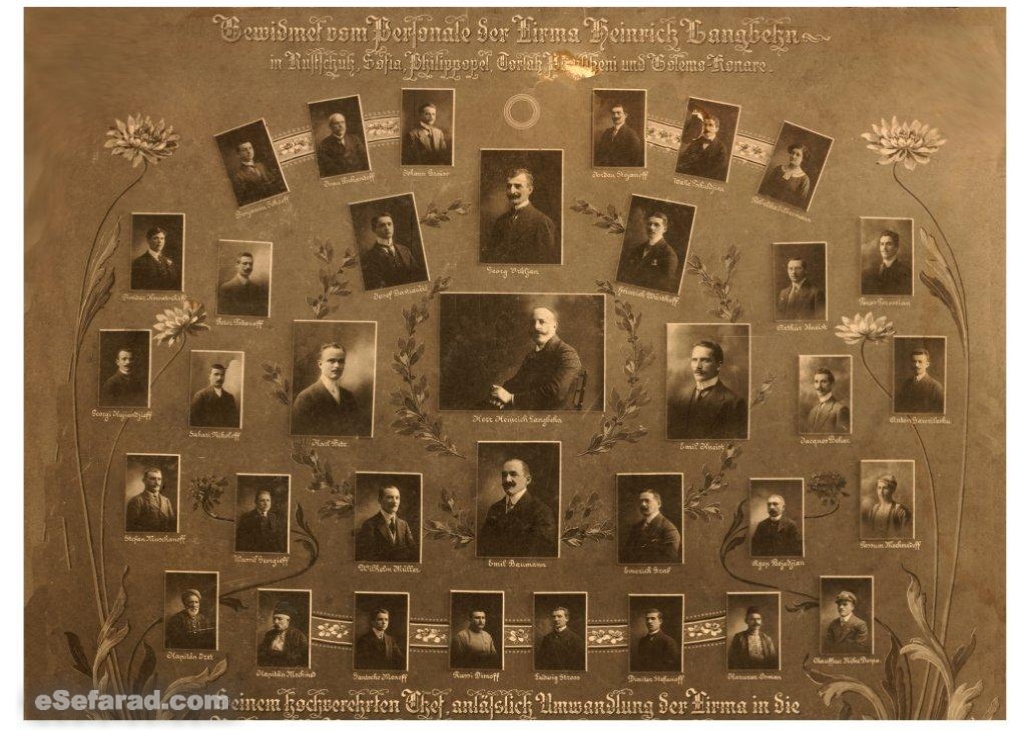
My mother graduated from her studies in a German Commerce School in Rusçuk, in February 1912. She graduated as an outstanding student, the only girl in her class, where only two other Jews studied besides her.[9]
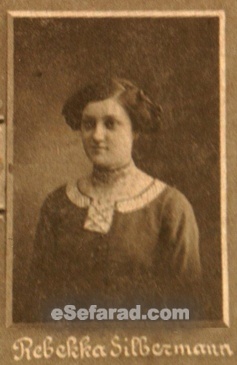
Since she was fluent in German and French, my mother found a job as a secretary in a commercial firm in the city already when she was 16. In time, many suitors asked to marry her, as my mother would proudly tell me, but she did not meet anyone that would sweep her off her feet. Her parents wished to marry her off to one of the men, a son of one of the community’s most respectable families. At the time, he studied with her in the secretarial school mentioned above,
Benjamin Schoeff. He came from a Sephardic family, and my mother had a friendly relationship with him, but according to her, there was no attraction between them. She refused to marry him and went on with her life.
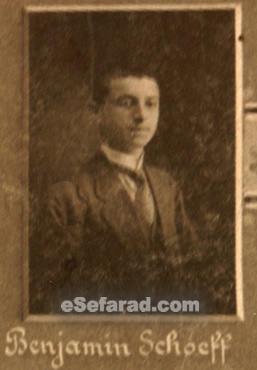 The success of my mother, the elder daughter of the Silberman family, was the family’s pride. She paved her way due to her skills and talents. And then, a man came to the city, who would be my father, a distant relative from Varna. He often came to visit his Silberman relatives, and was a handsome young timid young man, and of the same age of the girl whose reputation reached the far distances. According to my mother, she was simply impressed with his manners and the pleasure of talking to him. He was definitely not «the knight in shining armor», but more importantly, he was her kind of man. Her parents tried to dissuade her from giving up on the plan to marry the intended man, but my opinionated mother announced, just like her mother had done before her, that the Varna suitor, Heinrich (Haim) Kurtzberg would be her husband, as that is the man she wanted!
And so, the scandalous story of my grandparents’ marriage recurred 25 years later. This time the star was their eldest daughter, my mother, Rivka Silberman.
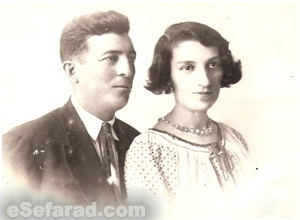
My parents married in Russe in 1921, and that is when my older sister, Rosa, was born in June 1922. It was hard for them to earn a living, and the meager help from my grandparents did not solve the problem. In addition, things became very hard for my mother’s family in Russe, parents and childrens. One after the other, they left the city and most of them moved to Varna. Sadly, I have never asked for the reason for the shunning of my grandmother, and it was never even hinted in my mother’s stories. Now I know the shunning cast its heavy shadow on the family.
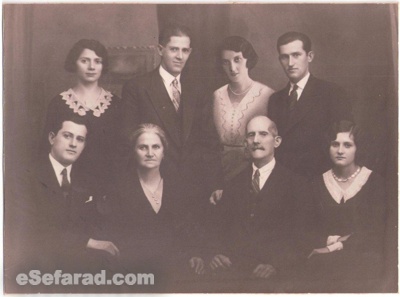
Difficulties Earning a Living, Wandering between Sephardic and Ashkenazi Communities
First Station: Widin, Bulgaria
From the stories I heard at home, I learnt that at that time (around 1923), livelihood difficulties led my parents to Bucharest, where my father found work as an electrician in a sugar factory. Again I encountered gaps between the family stories and the actual facts, where a few years ago I realized my mistake…In one of my research visits to Varna, I met with my cousin, Renche (nickname to Reina), daughter of my uncle Isaac, my mother’s brother, the only member of the family that remained in Bulgaria, since my uncle was a supporter of the communist regime.
In one of our conversations, she asked me if I knew anything about my parents’ adventures in Widin. I answered negatively wondering what she was talking about. She told me that when the Widin electric network was built in 1923, workers arrived from all over Bulgaria, and among them, the young family from Russe. As mentioned earlier, no members of the family remained in Russe after most of them moved to Varna. Isaac, my mother’s brother (whose daughter, Renche, told me the story) came up with the idea of going to Widin, where dozens of youths gathered, to build a dance club for the many workers, who sought to be entertained. «Your father, the electrician, was one of the many workers who came with his young wife.»[10] She continued, «He was also hired as a guard to watch the place in the evenings and drive drunks out of the club.»
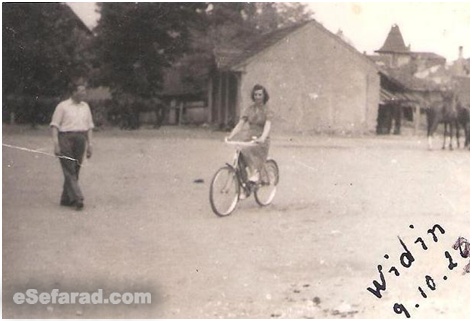
I was suddenly enlightened. Among the few photographs from that time, I remembered one, with my mother riding her bicycle and my father watching her. When I was busy mapping the Widin cemetery in 1992/3, I thought the place where my mother was photographed was familiar, as it looked much like the square near the Widin Jewish school which had been recently demolished. I dismissed the thought as I could not find a reason why my parents would be doing in such a faraway city. Again, I was reminded about the significance of documents and photographs. Similarly to the surprise about my mother’s place of birth, the photograph and Renche’s story (Renche was named after our grandmother, Reina), the curtain rose over a story that had been unknown to me or to the other members of my family.
Second Station – Bucharest, Romania
Later in that year (1923), my family continued wandering; when my father’s work in the Danube city was done, my parents and my sister Rosa traveled to Bucharest. Where my father, as I mentioned above, found work as an electrician in a sugar manufacturing factory. After a while, my second sister, Margaretta, was born there. The Kurtzberg’s remained in the Capital of Romania for five years (until 1928).
The family experienced an embarrassing, even frightening incident there. One day, when they were strolling in the Bucharest fair, Gypsies kidnapped my sister, Rosa, and for a few hours, my parents, hearts stopped beating…passers-by offered help and chased the Gypsies, and managed to catch them. According to my mother, still overwhelmed by the trauma, the Gypsies explained that the four year old girl looked like a princess to them, so…
Third station – Izmir, Turkey
When my parents were in Romania, my mother was invited to work as the secretary in the «Alliance» school in Izmir, Turkey. Knowing languages certainly helped her get the job. My father was hired as the school’s maintenance man. My family spent eight years in Izmir.
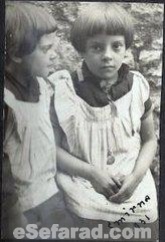
While writing these lines, collecting the photographs, examining them and trying to remember the little I had heard from my mother, a cloud of doubt began to develop about this chapter in my parents’ life. It was clear to me that they had gone to Izmir, but my searches in the Alliance archives in Paris in the attempt to find a bit of information about my mother yielded nothing. Moreover, I carefully examine the photographs of the time when my parents lived in Izmir, and I was convinced that this was not an «Alliance» school, but rather, on the back of a photo, I found, written in my mother’s clear handwriting in Bulgarian, «Souvenir from the Notre Dame De Sion School in Izmir!» And as often happens, a flicker of memory dismissed the doubts.
I remembered my mother telling me that in her youth she learnt French in the Lycée Français Notre Dame de Sion in Rusçuk…[11] She added that this was because of her parents’ distress, as that school was practically free. Her brothers, she said, went to the Bulgarian school in the city. I also remembered she told me with great pride that her studies in two foreign schools, the French one, and later the German school, influenced her future and that of her family.
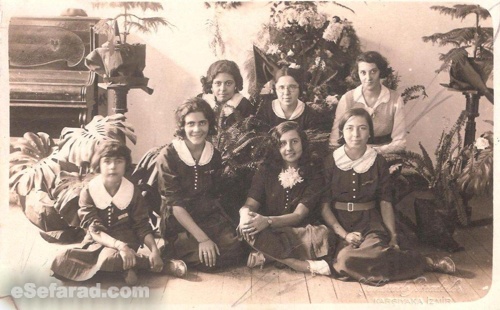
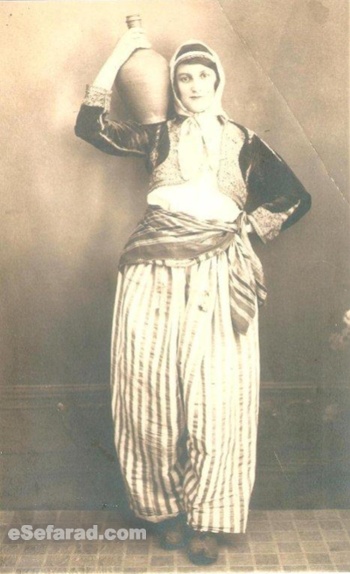
These things, which I had almost forgotten, corresponded well with the photographs I was examining: Indeed they traveled to Izmir, where they both got work, but in the branch of that Christian institution where my mother had learnt French in Russe – the Izmir Notre Dame de Sion! What with one of the photographs taken on a school trip, we can see priests and nuns, which certainly do not belong in an «Allaince» school.
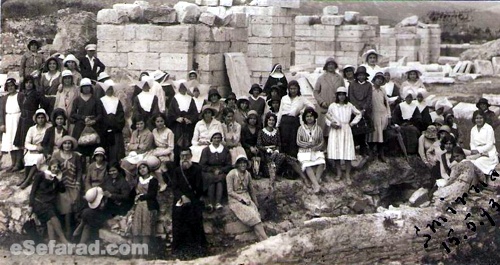
The question is why I had the «Alliance» school engraved in my memory? I do not know. However, it is likely that in recent years, my massive use the «Alliance» archives in Paris, and my many visits there, may have shifted its connection with my mother’s French language steered me in that direction. And here was another fact, as I knew very well – that the «love affair» between the Paris administration and the Bulgarian Jews ended with a slammed door and a great dispute already in the 1910s.[12]. Nevertheless, the French Mission School was erased from my memory by the Jewish «Alliance»…
Fourth and Last Station: Sofia, Bulgaria
My mother’s education and her mastery of seven languages, and my father’s technical skills brought some success to the family. On the other hand, my father was occupied with an eggplant growing deal with a local partner, but the deal fell through and some of the family’s savings were lost. The father’s naiveté in business made the family return to Sofia, capital city of Bulgaria after 15 years, with their two daughters.
And there I was born. The youngest Kurtzberg family member was the result of a surprising, unexpected pregnancy. The younger of my two sisters is 12 years older than me, and it seemed my parents would suffice with the two girls. Eventually, they decided I would be born in Bulgaria, and so, in April 1935, my mother traveled to Bulgaria on her own.
On August 1, 1935, my father was informed of the birth of his son, and without waiting for litigation with his Turk partner, packed his things and arrived breathless to the hospital a few days later…the joy was double, as my mother said. First, a boy was born after two girls, and without planning. Second, the boy was born in a caesarean section, which was then a complex and rather dangerous procedure, but the surgery went well.
My parents had to start all over again, but now they had three children, each born in a different city. Furthermore, they had neither possessions, nor a home. My father’s family disappeared without a trace, and therefore could not help, what with them being somewhere in the faraway Varna. In contrast, my mother’s brothers, some of whom also lived in Varna, on the Black Sea coast, and some in Sofia, gathered their efforts and helped the family as best as they could. My mother went to work early and managed their home calmly and confidently, as stated by the poet: «She openth her mouth with wisdom; and the law of kindness is on her tongue; She looketh well to the ways of her household and eatheth not the bread of idleness».[13]
……………………………………….
The Way Home
Like most of the Sofia Jews in World War II, my family was deported to the province city of Pleven. We were there for over a year, until Bulgaria’s liberation by the Soviet Army. We returned to Sofia about a year after we were deported to Pleven.
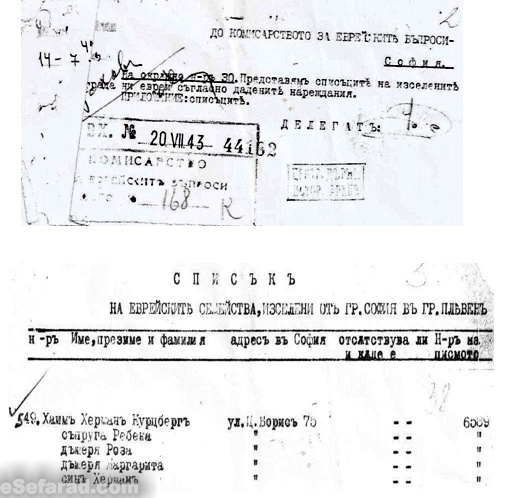
Contrary to many of the Jews in the province cities, we were lucky. Since more than 2,000 Sofia Jews were sent to Pleven, the Jewish homes and institutions of the city could not contain all the refugees, and my family was sent to a Bulgarian family in the outskirts of the city. Life with them was a refreshing contrast to our condition as refugees. They took care of all our needs, refused to accept rent we had to pay, as they knew my parents were not allowed to work for a living. In fact, they supported us, and demanded nothing in return.[15] We returned to our home in Sofia, where a Bulgarian friend guarded its contents.
My father had always been a Zionist activist, mainly in the «Poalei Zion» movement. That is why we received a British certificate through the Jewish Agency.
In the fall of 1945, on Christmas Eve, the shining lights of Haifa welcomed us with other hundreds of immigrants looking excitedly at the shore from the deck of the ship, «Transylvania».
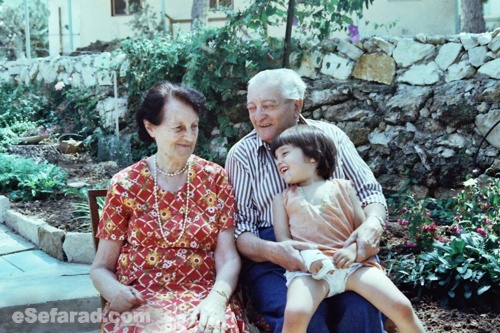
My parents ended their lives peacefully and at an advanced age, in my Kibbutz, Kfar Menahem, where they had spent the last 35 years of their lives in the status of «parents». May their memory be blessed!
Epilogue
Like many other youngsters, wherever they are, I had never known how to ask, find out or be interested in the many turns of the life of my family. Only after my parents had passed away, and I delved into the research of Bulgarian Jews in general, and into writing my Ph.D thesis about the Jewish community in Rusçuk in particular, were some hidden, but significant details about my family clarified.
This is the place to emphasize that never, except the brief explanation by my mother, was the Alkalay family (my grandmother’s family) mentioned in the Silberman and Kurtzberg families. I have no doubt that my parents roaming and the Silbermans’ leaving Russe, were due to numerous complex reasons, the main one being looking for a way to earn a living.
I deem it important to note two inevitable insights upon ending the review of my family’s history. The first, my long lasting failure of not finding out the best of the parents’ memories when the time was right, and thus my failure to preserve the uniqueness of their fascinating life stories, and that, not only as a historian, but rather as a son interested in the history of his parents and their families.
The second insight derives from the first, and is the blessing of my occupation, which enabled me, despite my past lack of interest, to realize my capabilities and publish, though in fragments, details that were captured in the photographs, the documents and my mother’s stories, which to my shame, I could hardly recall. In this way, I could try and reconstruct the family narrative and learn about the events which caused tension in the family and their consequences.
Today, being in charge of the Bulgarian Section of the Central Archives for the History of the Jewish People in Givat Ram, Jerusalem, I am approached by many people who need help in tracing their roots. There seems to be a «Renaissance» of memoir writers, who collect every bit of information from their families’ past in the attempt to pass it on the next generations. It is important to not the benefit of the informed collaboration between history and genealogy, which is a winning heritage preservation combination, be it personal or national.
Zvi Keren
zvi1keren@gmail.com
Dr. Zvi Keren was born in Sofia, Bulgaria, and is a member of Kibbutz Kfar Menahem. For over 20 years, Zvi has been studying Bulgaria’s Jews, including photographing, mapping and documenting the old cemeteries there. He led the documentation and photographing over 200,000 documents from the main archives in Sofia and the province cities. Zvi is responsible for the editing and complementing the «electronic sheets» of 34 communities in Bulgaria in the Jewish Diaspora Museum (Beth Hatefutsoth) in Tel Aviv. Since 2004 Zvi has been head of the «Bulgarian Section the Central Archives for the History of the Jewish People in Givat Ram, Jerusalem, where thousands of documents, photographs, newspapers, cassettes and DVDs with films and recorded stories are stored, in addition to over 600 books in many languages, about Bulgarian Jews. He is preparing two books which are dealing with the Bulgarian Jews, and will be published in the near future.
Dr. Zvi Keren is married with three children and nine grandchildren.
¨ Cyrillic script as used inBulgaria. Reads Russe (Editor’s Note).
[1]. About the Alkalay family of Rusçuk and its activity in the community, see: Rosanis, A. Journal, paragraph 61 (manuscript). The journal is soon to be published with an introduction and scientific interpretation; Rosanis. S.A. Istoria di la comunidad Israelita di Rusçuk (Rusçuk, 1914) p. 151; Kobo, Y. Jews of Rusçuk, Bulgaria, between East and West (Dalia, 2002) p. 24, 39, 67, 143, 166) Keren, Z. The Jews of Rusçuk, from Periphery to the Tuna Vilayeti, (Istanbul, 2011) pp. 85, 111-114, 143.
[2] .Agnon, S.Y. A Simple Story, (Jerusalem-TelAviv 1975).»nebech» in Yiddish – poor, unfortunate person.
[3]. Song of Songs, 3:4
[4].About the struggles between the «Notables» in the community, and those who were not so privileged, read my article «The fight for the House» – the conflict regarding ownership of the Alliance school in the city in 1885. The article is about to be published in a collection of articles about Bulgarian Jewry.
[5]. The PhD Thesis has turned into a book about the Rusçuk community (See footnote 1).
[6]. Solitreo script is the cursive form of Ladino written in the Rashi script which had developed from block letters and served the Jews of the east from some 450 years, until the second half of the 19th century. Ladino was written in Rahsi script or in block letters. Sometimes it was written in Latin letters and at other times, in Solitreo, which was quite common in Sephardic communities. (Editor’s note).
[7].Doikov, V., Dimitrov, S., Simeonov, Gradove na Bâlgaria/ Towns in Bulgary , (Pyce, 2009), pp. 102 – 104.
[8]. A good deal has been written about author Elias Canetti. In 2006, on his 100th birthday, the city of Russe held an exhibition which toured the world. A fancy bi-lingual Bulgarian-German catalogue was printed for the exhibition: Elias Canetti, Der Ohrenzeuge des Jahrhunderts, Russe (2006).
[9] .This is a translation from German of the inscription on the photograph where unfortunately, the bottom line was not included in the processing of this old photo. At my request, Prof. Doikov found a few details about the school and its principal. The interesting detail is that since 1907, the offices of the company had moved to the building that was formerly the Alliance school; see my book pp. 249/250 photograph of the building then and now.
My gratitude goes to Haim Miller for translating:
First line from top: Dedicated from the firm’s personnel to Heinrich Langbehn
Second line from top: Rustschuk, Sofia, Philippopel, Tarlak, Pawlikeni, Golemo Konare
First line on the bottom: To the esteemed chef in honor of changing the firm’s status
Second Line on the bottom: to the Bulgarian commercial Stock Company on February 1/ 14, 1912.
[10]. My one year old sister remained in Varna with the grandparents, the Silbermans.
[11]. Notre Dame de Sion. Bakardjieva, T., Yordanov, S., Ruse, Prostranstvo i Istoria (Kraya na XIV v. – 70te godini na XIX)/ Russe, Place and History, end of XIV cent. – the 70th of the XIX cent. Russe 2001, pp. 172-173.
[12]. See Joseph Conforti’s Ph.D thesis: «Leadership of Bulgarian Jews from the End of the Ottoman Regime to the Eve of World War I (1878 – 1913)», guided by Prof. Mina Rosen, Haifa 2012; In particular: The Mission and The «Alliance» society p.80 on.
[13]. Proverbs, 31, 26-27.
[14]. My thanks to Ms. Gezenko, who had brought to my attention these documents about the deportation of my family from Sofia to Pleven, Bulgaria State Agency, (ASA) , ASA, 1568k, F.1/a.e. 105, p 2, ASA, 1568k, F.1/a.e. 105, p. 38.
[15]. My attempts to find the family that had saved my family have failed. I was a young boy and cannot remember their names. My parents have, as mentioned, passed away, and my sisters did not remember anything. In 1990, when I was in Pleven for my research, I could not find the members of the family in the local municipality. Another search in albums yielded a picture of a farmer taken in 1943, without mentioning her name, but her face was familiar. I assume she was the landlady. I intend to send the picture to the municipality and ask them to publish it in the media. In this way I am hoping to trace the hosting family and express my gratitude to the descendants for their ancestors’ model behavior during those harsh, distant times.
—————————————————-
Yehuda Hatsvi
Erets Yisrael
Para Ladinokomunita