eSefarad Noticias del Mundo Sefaradi

This is the weekly column of David Shasha in eSefarad.
The following article was published in the Sephardic Heritage Udate #587
Nahmanides on Ibn Ezra
By: Rabbi Gil Student
From Hirhurim blog, May 30, 2013
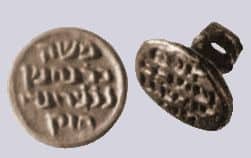
The figure of Moses Nahmanides in the Sephardic Jewish tradition is a complicated one: Born in Gerona, Nahmanides went to the academy of the Tosafot in the Rhineland to study and became a devout proponent of that extremist form of Jewish thinking. The school he developed among the Jews of Catalonia played an important role in the emergence of the Maimonidean Controversy.
Nahmanides was essentially an Ashkenazi in Sephardic garb.
I have addressed the larger issue of the Ashkenazi-Sephardi schism in the following articles:
http://www.huffingtonpost.com/david-shasha/killing-off-rational-juda_b_498846.html
http://www.huffingtonpost.com/david-shasha/dangerous-mystic-motifs-i_b_637535.html
Sephardic Judaism, as represented by a giant like Abraham ibn Ezra, held to the values of philosophy and science – what has been called Religious Humanism. Ashkenazim rejected these values as being outside the parameters of Jewish tradition. According to the Ashkenazi fundamentalists, philosophy and science promoted heresy and a way of thinking that was not Kosher.
The following article shows us the complications in this discussion.
Ibn Ezra is known for his voluminous but cryptic Bible commentary which focuses on grammar and language. His pronouncements on Biblical authorship and redaction are based on critical judgments that are an outgrowth of the Sephardic tradition of rational investigation.
The Ashkenazi school rejected such ideas and, as the article makes clear, rejected the insights on Ibn Ezra.
Nahmanides is often thought to represent the Sephardic heritage, but as we see here his position was more closely aligned to that of the Ashkenazi tradition. This anti-Sephardic bias led to confusion among Sephardim over the legitimacy of rational thought and science in a way that led to the adoption of anti-rational values and magical beliefs.
DS
R. Avraham Ibn Ezra has long been a controversial figure. R. Shlomo Luria (Yam Shel Shlomo, intro to Bava Kamma) respectfully but strongly rejects his entire approach to Torah commentary. What does the Ramban, one of the classical commentaries whose work serves as a foundation for modern Jewish thought, think of his predecessor, Ibn Ezra? He certainly disagrees often with Ibn Ezra, sometimes sharply. But there may be a more fundamental reason for opposition.
At the end of Ramban’s commentary on Shir Ha-Shirim, he writes that anyone who says that Ezra the scribe added to the Torah–such as Gen. 13:6 or Deut.3:11–is a heretic (Kisvei Ha-Ramban, vol. 2 p. 548). Ibn Ezra famously suggests that four verses imply post-Mosaic interpolations–Gen. 12:6, 22:14, Deut. 3:11, 31:22. Ramban, who shows clear expertise in Ibn Ezra’s Torah commentaryn quotes two of these four verses in describing the heretic!
Coincidence? R. Betzalel Naor, in his annotated edition of Rashba’s Ma’amar Al Yishma’el (Orot: Spring Valley, NY, 2008, pp. 25-27) finds this correspondence convincing. The author of the commentary on Shir Ha-Shirim must have been condemning Ibn Ezra as a heretic. Even though some supercommentaries and scholars dispute the claim that Ibn Ezra ever intended anything other than that Moshe wrote those verses prophetically, many believe he made the more radical claim.1 If so, this passage from the Shir Ha-Shirim commentary condemns him as a heretic.
However, R. Naor points out that Ramban did not write that commentary. R. Chaim Dov Chavel argues cogently in his introduction to that work that it was written by the earlier, kabbalist R. Ezra of Gerona (Kisvei Ha-Ramban, vol. 2 pp. 473-475). If so, we can ask whether Ramban agreed with R. Ezra’s evaluation. R. Naor (ibid., pp. 136-143) makes the following points and suggestions:
- Even in his introduction to his Torah commentary, Ramban expresses his mixed attitude toward Ibn Ezra, which he calls “a public rebuke and private affection.” This might be used to describe a commentary that is both brilliant but occasionally sacrilegious. However, Ramban calls him “Rabbi” Ezra, a term of respect.
- It could be that Ramban interpreted Ibn Ezra conservatively, as some supercommentators and scholars have. If so, he could agree with R. Ezra of Gerona generally but disagree with him about Ibn Ezra.
- Ramban unquestionably rejected any post-Mosaic interpolations into the Torah, as seen in his general introduction to his commentary. While hiss attitude toward the level of prophecy of the Torah varies (commentary to Num. 16:5), that is nowhere near the claim that any verse postdates Moshe.
- Rabbeinu Tam wrote a poem in praise of Ibn Ezra. Perhaps this influenced Ramban to judge him favorably as an inadvertent heretic, which was a status that, according to the Ra’avad (Hilkhos Teshuvah3:7), even great scholars fell into.
- The Chida (Shem Ha-Gedolim, part 1, alef 89) quotes R. Binyamin Spinoza, a late eighteenth century rabbi, who deduces from Ramban’s failure to argue against Ibn Ezra’s radical suggestions that those comments must be late forgeries (interpolations?). Had Ramban seen them, he would surely have objected.
In the end, once we determine that the commentary to Shir Ha-Shirim is a forgery, we can only speculate about Ramban’s attitude toward Ibn Ezra. Maybe he agreed with R. Ezra of Gerona’s condemnation or maybe he felt the belief was wrong but not heretical. Or maybe, as R. Naor suggested, he rejected the belief as heretical but not the person.
Notes
[1] On this disagreement, see R. Yonatan Kolatch, Masters of the Word, vol. 2 pp. 310-318.
—————————————————————————————————————-
 by David Shasha to eSefarad.
Copyright David Shasha & eSefarad all rights reserved
Copyright David Shasha & eSefarad todos los derechos reservados.
David Shasha is the founder and director of the Center for Sephardic Heritage in Brooklyn, New York designed to raise awareness of the history and culture of Arab Jews. He publishes the Sephardic Heritage Update, a weekly e-mail newsletter available on Google Groups. He has written for publications such as the Huffington Post, Tikkun magazine, The Progressive Christian, and The American Muslim. You can contact him at david.shasha.shu@gmail.com