eSefarad Noticias del Mundo Sefaradi

Inglés/Castellano
Sephardic Jews have lived in many countries and lands. They have always brought with them a zest for life and a beautiful culture that is reflected in their creative work. In this seccion, a few of the many famous Sephardic Jews who have positively contributed to the world we live in. From rabbis to doctors and actors to poets, these Sephardic Jews have changed the direction and intensity of both the Jewish and Western World.
Los judíos sefardíes han vivido en muchos países y tierras. Siempre han traído consigo un gusto por la vida y una cultura hermosa que se refleja en su trabajo creativo. En esta sección, algunos de los famosos judíos sefardíes que han contribuido al mundo en que vivimos. Desde rabinos hasta médicos, desde actores hasta poetas, estos judíos sefaradíes han cambiado la dirección y la intensidad tanto del mundo judío como del mundo occidental.
——————————————————————————————
Claude Cohen-Tannoudji
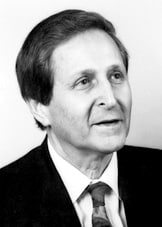
Claude Cohen-Tannoudji, Nobel Laureate Chemistry.
(Autobiography) I was born on April 1, 1933 in Constantine, Algeria, which was then part of France. My family, originally from Tangiers, settled in Tunisia and then in Algeria in the 16th century after having fled Spain during the Inquisition. In fact, our name, Cohen-Tannoudji, means simply the Cohen family from Tangiers.
The Algerian Jews obtained the French citizenship in 1870 after Algeria became a French colony in 1830.
My parents lived a modest life and their main concern was the education of their children. My father was a self-taught man but had a great intellectual curiosity, not only for biblical and talmudic texts, but also for philosophy, psychoanalysis and history.
He passed on to me his taste for studies, for discussion, for debate, and he taught me what I regard as being the fundamental features of the Jewish tradition – studying, learning and sharing knowledge with others.
As a child, I was very lucky to escape the tragic events which marked this century. The arrival of the Americans in Algeria, in November of 1942, saved us from the nazi persecutions that were spreading throughout Europe at the time. I completed my primary and secondary school education in Algiers. And I was also lucky enough to finish high school in very good conditions and to leave Algiers for Paris, in 1953, before the war in Algeria and the stormy period that preceded the independence.
In 1988, when sub-Doppler temperatures were observed by Bill Phillips, who had been collaborating with us, we were prepared with our background in optical pumping, light shifts and dressed atoms, to find the explanation of such anomalous low temperatures. In fact, they were resulting from yet another (low intensity) version of Sisyphus cooling. Similar conclusions were reached by Steve Chu and his colleagues. At the same time, we were exploring, with Alain Aspect and Ennio Arimondo, the possibility of applying coherent population trapping to laser cooling. By making such a quantum interference effect velocity selective, we were able to demonstrate a new cooling scheme with no lower limit, which can notably cool atoms below the recoil limit corresponding to the recoil kinetic energy of an atom absorbing or emitting a single photon.
These exciting developments opened the microKelvin and even the nanoKelvin range to laser cooling, and they allowed several new applications to be explored with success. These applications led to the research for which we were awarded the Nobel Prize.
——————————————–
Claude Cohen-Tannoudji, Premio Nobel de Química.
(Autobiografía) Nací el 1 de abril de 1933 en Constantine, Argelia, que entonces era parte de Francia. Mi familia, originaria de Tánger, se estableció en Túnez y luego en Argelia en el siglo XVI después de haber huido de España durante la Inquisición. De hecho, nuestro nombre, Cohen-Tannoudji, significa simplemente la familia Cohen de Tánger.
Los judíos argelinos obtuvieron la ciudadanía francesa en 1870 después de que Argelia se convirtiera en una colonia francesa en 1830.
Mis padres vivieron una vida modesta y su principal preocupación fue la educación de sus hijos. Mi padre era un hombre autodidacta, pero tenía una gran curiosidad intelectual, no sólo para los textos bíblicos y talmúdicos, sino también para la filosofía, el psicoanálisis y la historia.
Me transmitió su gusto por los estudios, la discusión, el debate, y me enseñó lo que consideró como las características fundamentales de la tradición judía: estudiar, aprender y compartir el conocimiento con los demás.
Cuando era niño, tuve mucha suerte de escapar de los trágicos acontecimientos que marcaron este siglo. La llegada de los estadounidenses a Argelia, en noviembre de 1942, nos salvó de las persecuciones nazis que se extendían por toda Europa en ese momento. Terminé mi educación primaria y secundaria en Argel. Y también tuve la suerte de terminar el bachillerato en muy buenas condiciones y abandonar Argel para ir a París, en 1953, antes de la guerra de Argelia y el tormentoso período que precedió a la independencia.
En 1988, cuando Bill Phillips, que colaboraba con nosotros, observó las temperaturas sub Doppler, nosotros estabamos preparados, con nuestra experiencia en bombeo óptico, cambios de luz y átomos vestidos, para encontrar una explicación de tales bajas temperaturas anómalas. De hecho, eran resultando de otra versión (de baja intensidad) de refrigeración de Sísifo. Steve Chu y sus colegas llegaron a conclusiones similares. Al mismo tiempo, estábamos explorando, con Alain Aspect y Ennio Arimondo, la posibilidad de aplicar una captura coherente de la población de enfriamiento por láser. Haciendo selectiva esta velocidad de efecto de interferencia cuántica, pudimos demostrar un nuevo esquema de enfriamiento sin límite inferior, que puede enfriar notablemente átomos por debajo del límite de retroceso correspondiente a la energía cinética de retroceso de un átomo que absorbe o emite un solo fotón.
Estos emocionantes desarrollos abrieron el microKelvin e incluso la gama nanoKelvin al enfriamiento por láser, y permitieron explorar varias aplicaciones nuevas con éxito. Estas aplicaciones condujeron a la investigación para la cual nos fue concedido el Premio Nobel.
Fuente: lastar.org