 eSefarad Noticias del Mundo Sefaradi

Inglés/Castellano
Sephardic Jews have lived in many countries and lands. They have always brought with them a zest for life and a beautiful culture that is reflected in their creative work. In this seccion, a few of the many famous Sephardic Jews who have positively contributed to the world we live in. From rabbis to doctors and actors to poets, these Sephardic Jews have changed the direction and intensity of both the Jewish and Western World.
Los judíos sefardíes han vivido en muchos países y tierras. Siempre han traído consigo un gusto por la vida y una cultura hermosa que se refleja en su trabajo creativo. En esta sección, algunos de los famosos judíos sefardíes que han contribuido al mundo en que vivimos. Desde rabinos hasta médicos, desde actores hasta poetas, estos judíos sefaradíes han cambiado la dirección y la intensidad tanto del mundo judío como del mundo occidental.
——————————————————————————————
Baruj Benacerraf
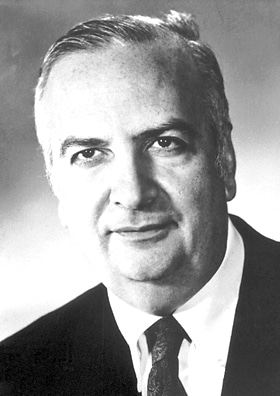
Baruj Benacerraf, Nobel Laureate Life Science.
(Autobiography) I was born in Caracas, Venezuela, on October 29, 1920 of Spanish-Jewish ancestry. My father, a self-made business man, was a textile merchant and importer. He was born in Spanish Morocco, whereas my mother was born and raised in French Algeria and brought up in the French culture.
When I was five years old, my family moved to Paris where we resided until 1939. My primary and secondary education was in French which had a lasting influence on my life.
The second World War caused our return to Venezuela, where my father continued to have a thriving business. It was decided that I should pursue my education in the United States, and we moved to New York in 1940.
I registered at Columbia University in the School of General Studies, and graduated with a Bachelor of Science Degree in 1942, having also completed the pre-medical requisites for admission to Medical School. By that time, I had elected to study biology and medicine, instead of going into the family business, as my father would have wanted. I did not realize, however, that admission to Medical School was a formidable undertaking for someone with my ethnic and foreign background in the United States of 1942.
In spite of an excellent academic record at Columbia, I was refused admission by the numerous medical schools I applied to and would have found it impossible to study medicine except for the kindness and support of George W. Bakeman, father of a close friend, who was then Assistant to the President of the Medical College of Virginia in Richmond. Learning of my difficulties, Mr. Bakeman arranged for me to be interviewed and considered for one of the two remaining places in the Freshman class. I was accepted and began my medical studies in July 1942.
While in medical school, I was drafted into the U.S. Army with the other medical students, as part of the wartime training program, and naturalized American citizen in 1943. I greatly enjoyed my medical studies, which at the Medical College of Virginia were very clinically oriented. I received what I considered to be an excellent medical education in the relatively short time of three war years. This busy time was rendered very happy by my marriage in 1943 to Annette Dreyfus, a French student, also a refugee from Paris, whom I had met at Columbia University.
I trained as an intern at Queens General Hospital in New York City in 1945 and was commissioned First Lieutenant in the U.S. Army Medical Corps in 1946. After the usual six weeks of basic training at Fort Sam Houston, Texas, I was shipped to Germany with several thousand other physicians. I was happy to be assigned to France, first in Paris, then in Nancy, where my wife had joined me. In 1970, Dean Robert Ebert offered me the Chair of Pathology at Harvard Medical School.
I moved to Harvard because I missed the University environment and more particularly the stimulating interaction with the eager, enthusiastic, and unprejudiced young minds of the students and fellows. At Robert Ebert’s request, we initiated an interdepartmental immunology graduate program at Harvard Medical School which has developed very successfully under the stewardship of my colleague, Emile Unanue. At Harvard, I have continued my work on immune response genes and their role in the regulation of specific immunity with David Katz, Martin Dorf, Judith Kapp, Carl Pierce, Ronald Germain and Mark Greene.
We also determined the role of immune response genes in the control of immune suppression phenomena with the help of Patrice Debré, Judith Kapp, and Carl Waltenbaugh; we analyzed the specificity of cytolytic T lymphocyte in relation to Ir gene function with Steven Burakoff and Robert Finberg and demonstrated how alloreactivity arises as a consequence of the commitment of T lymphocytes to recognize antigen in the context of autologous MHC gene products.
——————————-
Baruj Benacerraf, Premio Nobel de Ciencias de la Vida.
(Autobiografía) Nací en Caracas, Venezuela, el 29 de octubre de 1920, de ascendencia hispano-judía. Mi padre, un hombre de negocios hecho por sí mismo, era comerciante e importador de textiles. Nació en el Marruecos español, mientras que mi madre nació y creció en la Argelia francesa y educada en la cultura francesa.
Cuando yo tenía cinco años, mi familia se mudó a París, donde residimos hasta 1939. Mi educación primaria y secundaria fue en francés, que tuvo una influencia duradera en mi vida.
La segunda Guerra Mundial causó nuestro regreso a Venezuela, donde mi padre continuó teniendo un negocio próspero. Se decidió que debía seguir mi educación en los Estados Unidos, y nos mudamos a Nueva York en 1940.
Me matriculé en la Universidad de Columbia en la Escuela de Estudios Generales y me gradué con una Licenciatura en Ciencias en 1942, habiendo completado también los requisitos pre-médicos para la admisión a la Facultad de Medicina. Para entonces, yo había elegido estudiar biología y medicina, en vez de entrar en el negocio familiar, como mi padre habría querido. No me di cuenta, sin embargo, que la admisión a la Escuela de Medicina era una empresa formidable para alguien con mi origen étnico y extranjero en los Estados Unidos de 1942.
A pesar de un excelente historial académico en Columbia, me negaron la admisión de las numerosas facultades de medicina a las que solicité y habría encontrado imposible estudiar medicina excepto por la amabilidad y el apoyo de George W. Bakeman, padre de un amigo cercano, que era entonces Asistente del Presidente del Colegio Médico de Virginia en Richmond. Sabiendo de estas dificultades, el Sr. Bakeman dispuso que me entrevistaran y me consideraran para uno de los dos lugares disponibles en la clase de Freshman. Me aceptaron y comencé mis estudios médicos en julio de 1942.
Mientras estaba en la escuela de medicina, fui reclutado para el ejército estadounidense con los otros estudiantes de medicina, como parte del programa de entrenamiento en tiempos de guerra y naturalizado ciudadano americano en 1943. Disfruté mucho mis estudios médicos, que en el Colegio Médico de Virginia fueron muy bien orientados clínicamente. Recibí lo que consideré una excelente educación médica en el tiempo relativamente corto de tres años de guerra. En este tiempo ocupado me hizo muy feliz mi matrimonio con Annette Dreyfus en 1943, una estudiante francesa, también refugiada de París, que había conocido en la Universidad de Columbia.
Entrené como interno en el Queens General Hospital en la ciudad de Nueva York en 1945 y fui comisionado Primer Teniente en el Cuerpo Médico del Ejército de los EE.UU. en 1946. Después de las habituales seis semanas de entrenamiento básico en Fort Sam Houston, Texas, fui enviado a Alemania con varios miles de otros médicos. Yo estaba contento de ser asignado a Francia, primero en París, luego en Nancy, donde mi esposa se había unido a mí. En 1970, el Decano Robert Ebert me ofreció la Cátedra de Patología de la Escuela de Medicina de Harvard.
Me mudé a Harvard porque me había perdido el ambiente de la Universidad y más particularmente la interacción estimulante con las mentes jóvenes, ansiosas, entusiastas y sin prejuicios de los estudiantes y compañeros. A petición de Robert Ebert, iniciamos un programa de estudios de inmunología interdepartamental en la Escuela de Medicina de Harvard, que se ha desarrollado con gran éxito bajo la dirección de mi colega Emile Unanue. En Harvard, he continuado mi trabajo sobre los genes de respuesta inmune y su papel en la regulación de la inmunidad específica con David Katz, Martin Dorf, Judith Kapp, Carl Pierce, Ronald Germain y Mark Greene.
Fuente: lastar.org
