eSefarad Noticias del Mundo Sefaradi

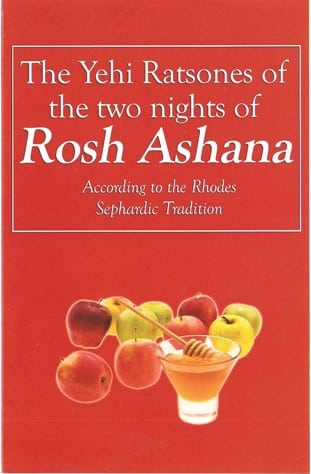
What are the Yehi Ratsones?
Jewish communities worldwide eat certain foods on Rosh Ashaná as a demostrative, symbolic expression of our prayer for a good year. This is based on the Talmud, tractate Horiyot (12A), where the sages explain that symbols have significance. Nachmanidies, the great Spanish scholar who wrote an extensive commentary on the Torah, explain that a symbol is significant since it is the beginning of fulfillment of blessing from the Almighty. Once a blessing takes root through even a simple symbolic act, the remainder of the blessing inevitably follow (See Ramban Parshat Lech Lecha).
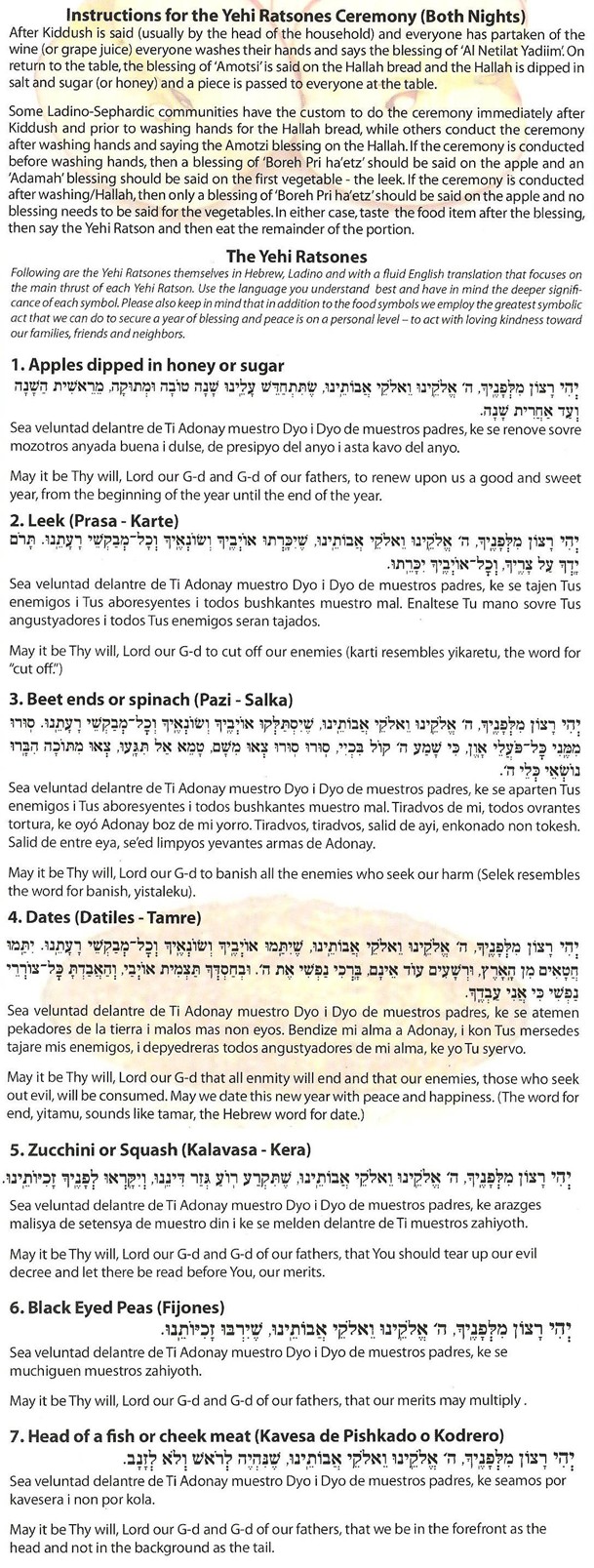
Sephardic communities have embraced this tradition and have fashioned elaborate menus for the two nights of Rosh Ashaná that include a variety of foods whose name, shape or color symbolize our great hopes for the year. Thes menus include an apple dipped (or baked/mixed) in honey as well as leeks, squash (kalavasa), legumes, spinach dates and fish or pomegranate.
Several of these foods are mentioned specifically with respect to their symbolism in the Talmud (tractate Keritot 6A). Prayers, reflecting the symbolic meaning of the food, begin with the words “Yehi Ratson” (may it be Almighty’s will) and are recited as we eat type each type of food. This is why this ceremony is referred to as the “Yehi Ratsones”.
Understanding the different Yehi Ratsones
The Ladino-Sephardic tradition is to begin the ceremony with the honeyed apple to symbolize a ‘sweet’ year from beginning to end. The apple represent the Shekhina (the Almighty´s presence) in a Kabbalistic metaphor and the honey symbolizes ‘tempering or softening’ the Almighty’s judgment with ‘sweetness’.
The next three items in the ceremony are leek, spinach and date all of which focus on keeping our enemies at bay. These foods are used as their names reflect different ways of asking the Almighty to keep our enemies away. The words of these Yehi Ratsones come from actual verses in Michah (5.8), Tehilim (6,104, 143), and Yish’ayahu (52.11).
The fifth item in the ceremony is ‘kalavasa’ –squash. This food, as the others, plays off the name of the food as it can be read to mean ‘cut/tear off’ and here we ask the Almighty to tear up any difficult decrees and only read our merits in any judgments.
The next item is either fish or pomegranate, which symbolize multiplication and which we use to ask for our merits to be multiplied. Fish are known to multiply and pomegranates have a multitude of seeds. The concept of using fish also may be in reference to blessings for fertility.
We conclude the ceremony with the head of a fish or a head of lamb (and some people like to use a candy fish head for the children, with fits in line with the symbolism). These foods both symbolize being at the head and the lamb recalls Isaac, our forefather’s, binding, which is a merit to the Jewish people.
Fuente: Congregation Ezra Bessaroth web site.
[print_link]